No Profit Line: How Does a Charity's Board Know It's Slipping?
Article by Kyle Keith, 8 November 2026
A business has profit to tell it how it's doing. A charity doesn't, so revenue becomes the score. This article explains how a revenue total can hide a shrinking base of supporters, and what a board pack that builds itself puts beside it.
Published on Apteco Mission's website on 8 November 2026.
A business has a profit line. Every quarter, it says how the business is doing.
A charity has no profit line. So the board looks at the next best thing: revenue.
That's where the trouble starts.
The question board members keep asking
For: executive directors and board members
Readers of the best-selling books on charity leadership raise the same worry in their reviews. Without profit to go by, how do you know if you're doing well? How do you know if you're slipping?
The books ask the right question: what are our results? But readers say the books leave the measuring to them, and that doing it well is hard.
Why revenue alone can fool a board
Revenue is a total. A total can grow while the number of people giving it shrinks.
Say a few loyal supporters give more this year. Revenue goes up. But fewer new people gave, and some long-time supporters didn't give at all. The total looks healthy. The base under it is getting smaller.
A board that sees only the total relaxes. A board that sees the people behind it asks a different question.
Three things to put beside revenue
Donor Movement. Who came, who stayed and who left this year.
Retained donors. The people who gave last year and gave again.
The same month last year. Compare this month with the same month last year, not with last month. A gala month next to a quiet month tells you nothing.
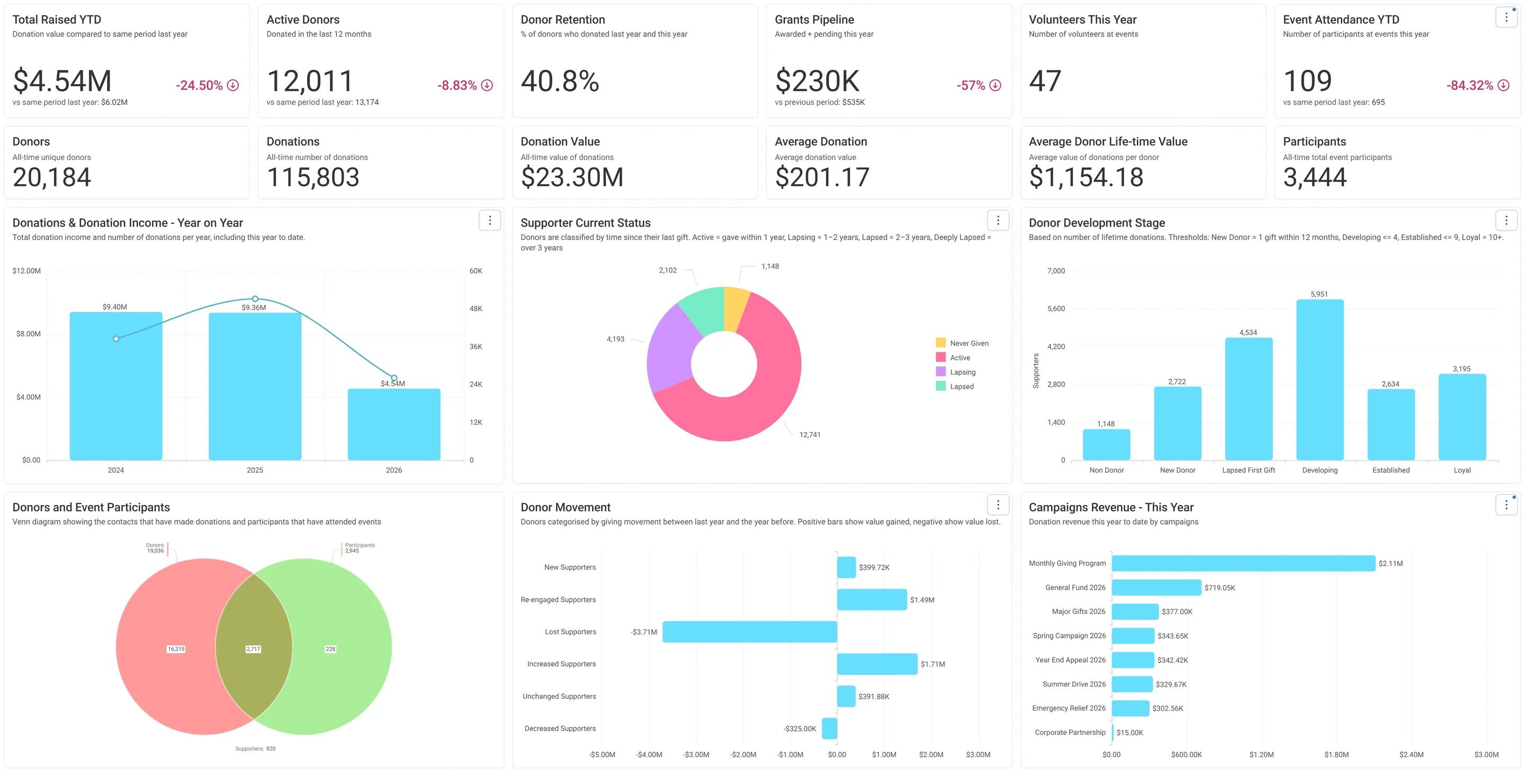
Charity Overview · Summary This is the Donor Movement chart on the Summary tab. It shows who is new, who came back, who was lost and who gave more or less, so a board sees more than the total.How a charity board knows if it's slipping
Why the numbers arrive too late to use
Most boards don't lack numbers. They lack numbers that arrive in time to use.
In many charities, the pack is rebuilt by hand before each meeting. Gifts come from the CRM. Revenue comes from the finance system. Grants come from a spreadsheet. Volunteer hours come from a coordinator's own count.
Each system keeps its own count, so the numbers don't always match. The pack lands the night before, and the first part of the meeting goes on what each number means.
Reviewers of the top books on boards describe the same thing. Board time goes on reading budgets and checking figures, not on the questions that matter.
A pack that builds itself
Here is what changes when the numbers come from one place.
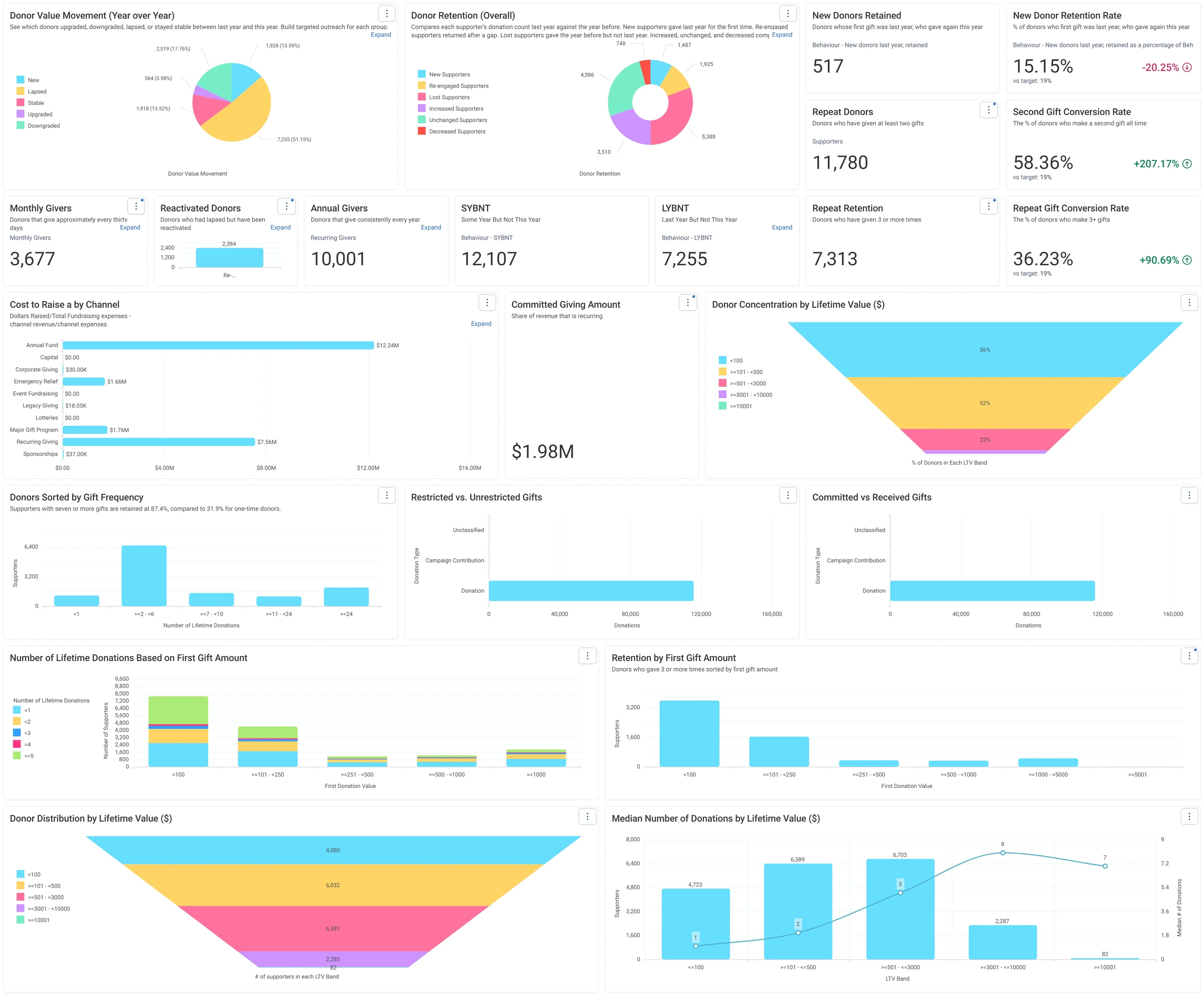
Jumping Off Metrics · Donor Health - Board Report This chart on the board report page shows how many donors stayed and gave again, split by the size of their first gift. It comes from the same records as every other number, so the pack is not built by hand.
The pack updates every time the data refreshes. Nobody rebuilds a spreadsheet.
The pack goes to the board two weeks before the meeting, view only.
A week before, board members send their questions by form.
In the meeting, everyone sees the same live numbers.
After, a PDF of just the tabs you choose goes in the minutes.
The meeting can start at the questions. And the questions from the form shape the next pack.
One honest limit
A better pack won't fix how a board governs. Good governance takes people, time and trust. What a pack can do is take the number-gathering off the agenda, so there's room for the rest.