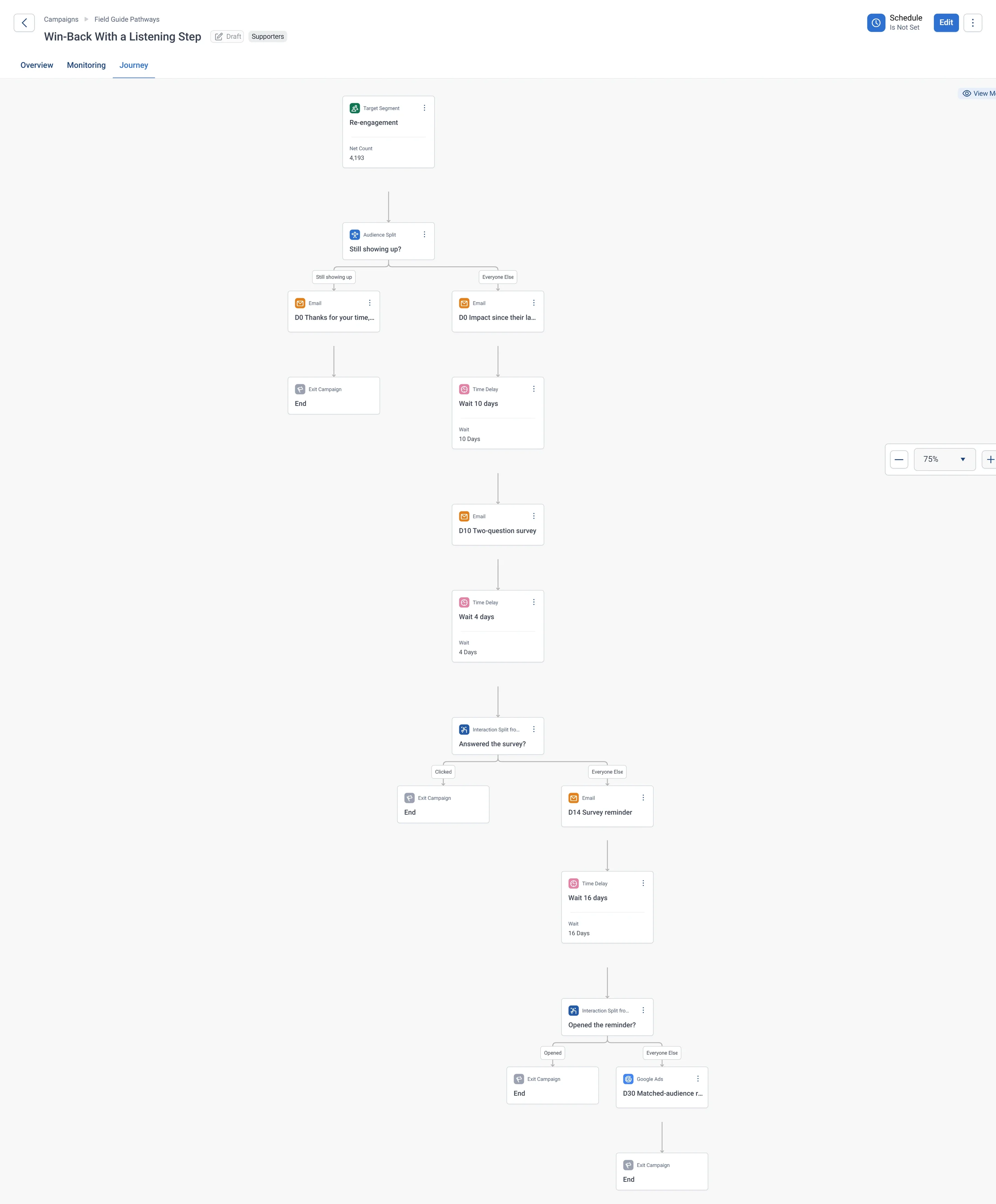
Apteco Mission gets the list right before anything writes to a lapsed donor, so someone who still volunteers or comes to events is thanked, not chased. Its Win-Back With a Listening Step pathway first splits out lapsed givers who still volunteer or come to events, who get a thank-you, not a chase. Everyone else gets an impact update, then a two-question survey on what changed and how they would like to hear from you. An AI virtual engagement officer, or VEO, can also help, but it is early, and it works best on a list that has been checked.
What a VEO does. The Chronicle of Philanthropy looked at the early pilots in August 2025. The VEO sends texts and emails, and it can send mailed notes written by a machine to look handwritten. It picks what to send, but only from content your staff approve. Supervisors can change its focus, and it sends a weekly report. Donors it warms up go to a human gift officer. Givzey told the Chronicle the pilots raised $2 million across 50 institutions from October 2024 to July 2025, with a 0.1 percent opt-out rate. Those are the vendor's numbers, not an outside study.
The list matters most. The same report found results depended heavily on which donors each VEO was given. One school started with low-potential donors and later suggested giving it stronger ones. Givzey's founder describes the work as still in research and development, so long-term results aren't known yet. A lapsed list is often a mix. Some people moved. Some give through another platform. Some still volunteer or come to events. Writing to all of them the same way wastes the effort.
Check who really left. The Fundraising Effectiveness Project defines a lapsed donor as someone who donated in a prior period but not in the current one. That is your CRM's view. Before any tool writes to them, look across your other systems. A lapsed donor who came to your gala or gave on a peer-to-peer page hasn't left. Thank them for that first. Then sort the rest by how long they gave and how recently they stopped.
Keep a person in charge. The UK's Fundraising Regulator says to monitor AI tools that work without a person reviewing each message, such as chatbots, and to avoid fundraising decisions made with no human oversight. It also says the greater the risk of misleading donors, the more open you should be. So decide how the VEO introduces itself, who reads the replies, and how fast a warm reply reaches a real person.
Pilot it small. The Regulator also advises trying an AI tool in a small setting first. Give the VEO one clear group of lapsed donors. Keep a similar group on your usual win-back, by mail, email or phone. After a few months, compare how many in each group gave again, and how many opted out. Then decide.
Any win-back works better when it starts with the right list. Apteco Mission joins your CRM and the other places supporter data lives into one record per person, beside your CRM. Survey answers come back as data, so the next journey uses the channel and frequency people asked for, and unsubscribes are respected on every later step. Its Catch Them Before They Lapse pathway reads each donor's own giving rhythm and flags how many days they have left before they count as lapsed, so you can act before they lapse at all.