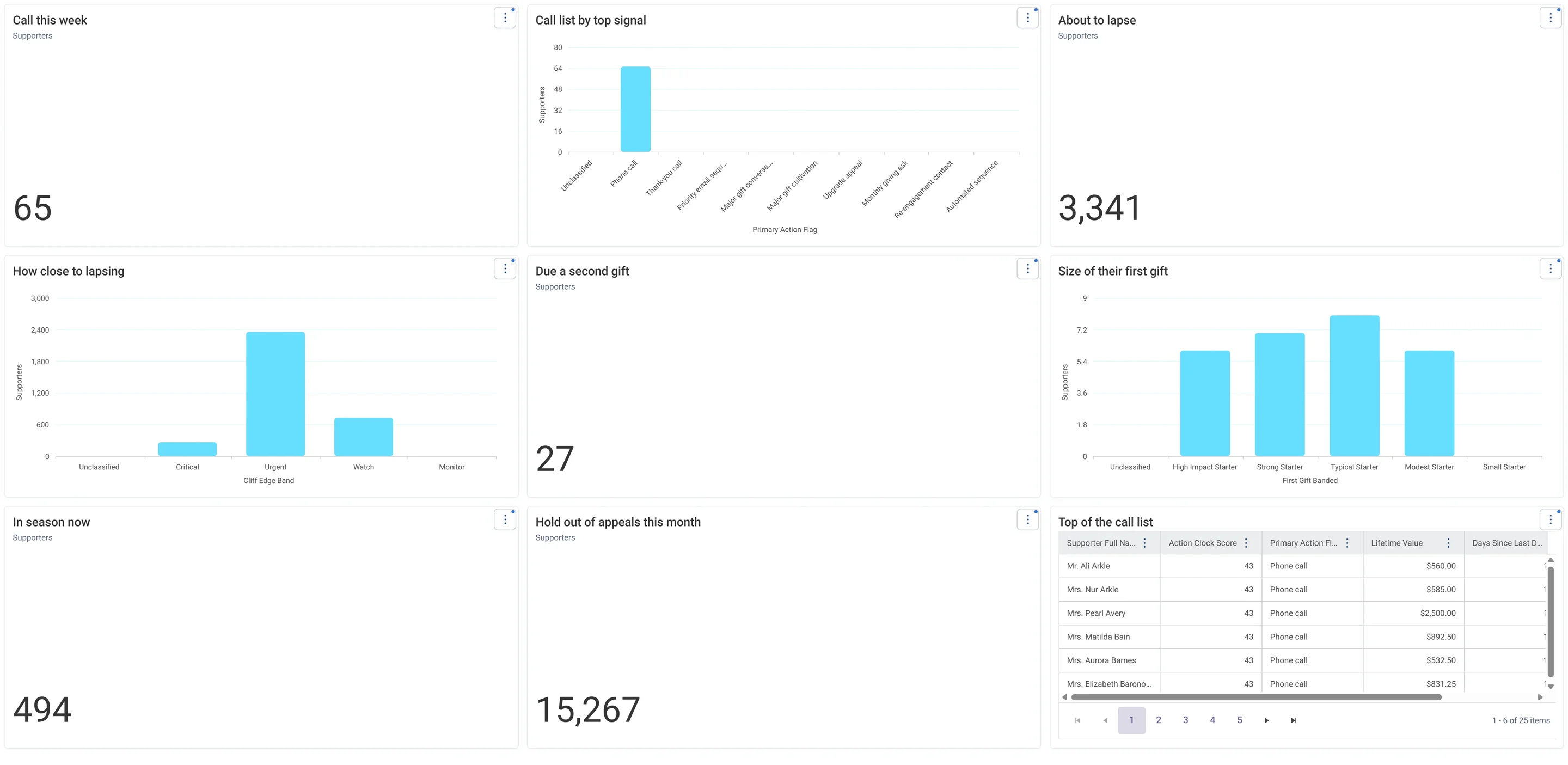
Apteco Mission starts from one idea: before you ask a lapsed supporter for money, check whether they really left. Its Win-Back With a Listening Step pathway notes that a giver your CRM calls lapsed may still be volunteering or coming to events, logged somewhere else. Lapsed givers who still volunteer or come to events get a thank-you for their time, not a chase. That is the sorting this question needs.
The straight answer: mostly, keep them, but not all in the same way. A lapsed donor's record holds their giving history, and some of your receipts and accounts must be kept by law. What you change is how you treat them. Ask the best of them back. Stop mailing the rest. Then set a written rule for when old data is deleted or made anonymous.
Why not delete them all. A lapsed donor is still a person who chose you once, and some come back. Their history shows who gave, when and why. Some records also have to stay. In Canada, the CRA books and records checklist says copies of most official donation receipts must be kept for at least two years from the end of the calendar year of the gift, and ledgers and source documents for six years. In the US, check with your accountant.
Why not keep everything forever. Privacy law expects a limit. Canada's privacy commissioner tells organizations to keep personal information only as long as it is needed, to set minimum and maximum retention periods, and to dispose of what no longer has a purpose. Old addresses also cost money, because a letter to someone who moved is wasted. Keeping a record and mailing to it are two different choices.
Sort before you decide. Split lapsed donors into groups. Recent and generous: call or write to them first. Still volunteering or coming to events: thank them, and do not chase the gift. Long gone after one small gift: stop mailing, and keep the record. Anyone who asked you to stop: honour it, every time. Mission's Catch Them Before They Lapse pathway works earlier, using each supporter's own giving rhythm to say who is slipping so you can act inside the window.
Clean the addresses before any mailing. A lapsed donor may simply have moved. Canada Post NCOA Mover Data service updates lists using consent-based mover information. In the US, the USPS NCOALink product lets mailers update lists with new addresses before mailing.
Write the rule down. Agree on a few lines with your finance lead. What you keep, and for how long. When a long-lapsed record moves to do not mail. When it is deleted or made anonymous. Who does it, and how often. Then follow it each year. Think of your CRM as the filing cabinet: it keeps the record and the rule. Mission is where you go to ask questions of what is in it, like who is slipping away. Nothing has to move. See whether Mission replaces your CRM.