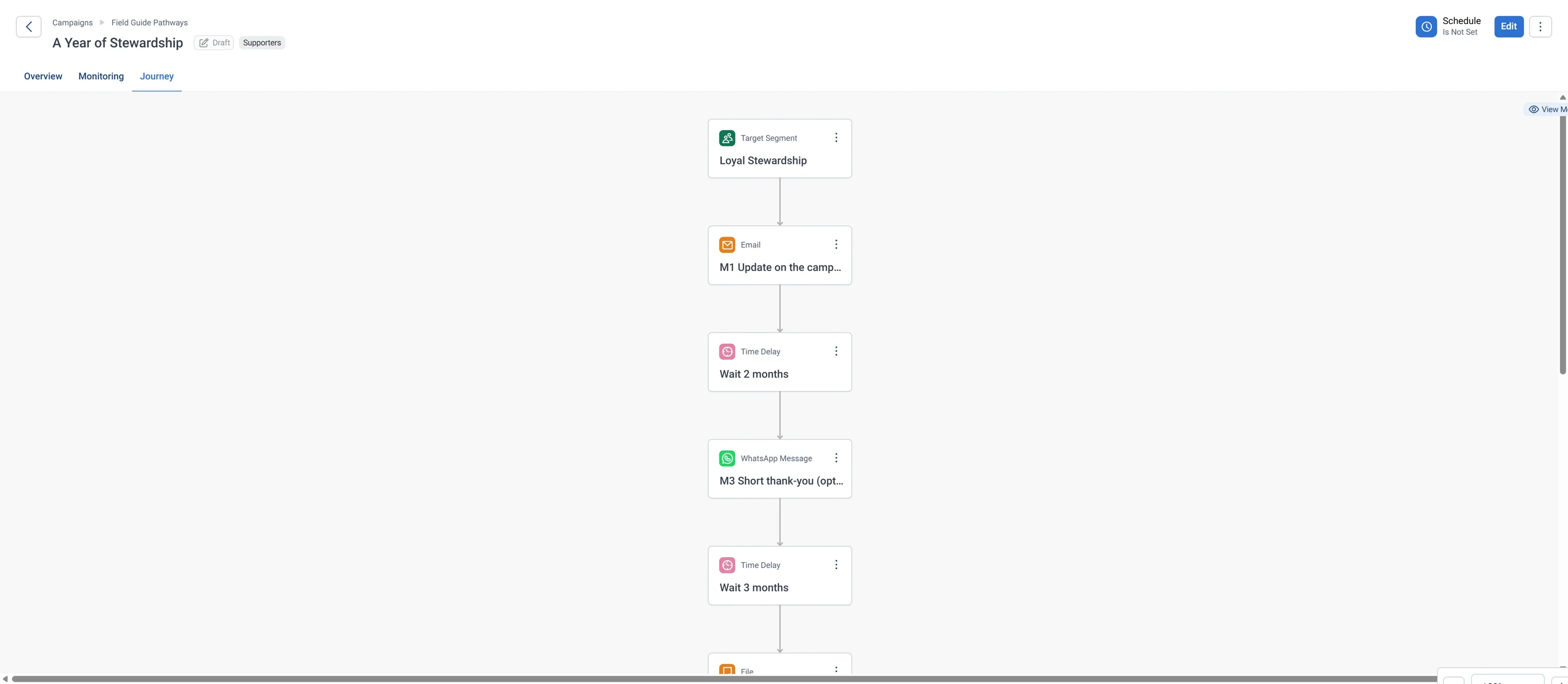
Apteco Mission joins gifts, campaigns and event attendance into one record per person, beside your CRM. A Year of Stewardship says stewardship often runs from a separate spreadsheet, kept apart from the gift history, so nobody sees the whole year a supporter had. A single record is where that view starts. It is the same problem as a gift with no code: the gift sits in one system, and the calls, emails and visits that led to it sit in others, so nobody can say what moved the donor.
Keep two kinds of credit apart. The appeal code says which ask a gift answered. Stewardship credit says which relationship made the gift possible. When a gift arrives with no code, record it as no appeal. Do not guess a code. Then credit the relationship: the staff or board member who looks after that donor, and the visits, calls and thank-yous the donor had in a set window before the gift.
Do not invent an appeal code. When a gift comes in a plain envelope, or through the website with no tag, a made-up code makes an appeal look better than it was. A clear no-appeal code keeps your appeal results honest. It also shows how much of your giving comes from relationships, not asks.
Credit the person who built the relationship. Many donor systems have a place for this beside the gift. In CiviCRM, a soft credit of the type Solicited gives credit to someone who is not the donor. Apteco hosts CiviCRM for charities that want it run for them, as the FAQ says. This credit never changes who gave or which appeal the gift sits under.
Log the touches, with dates. Every visit, tour, thank-you call, impact report and event invitation goes on the donor's record, with the date and who did it. Without dates, nothing links a stewardship call to the gift that came after it.
Set a window, then count. Agree a window, such as the few months before a gift, and use the same one every time. A no-appeal gift that arrives inside the window after a stewardship touch counts as influenced by that touch. Call it influence, not proof, because the gift might have come anyway.
Report both views. Give your leaders two lines. Gifts by appeal show what your asks raised. Gifts by relationship show what the stewardship work raised, including gifts with no code. Mission's Campaign Performance dashboard links each gift to its campaign, so each campaign has a result. Together the two views stop quiet work from looking like it raised nothing.