Apteco Mission Field Guide Schedule Time with an Apteco Architect Play with a Live System

Cost to Acquire a Supporter

6 steps · Shared modules, Google, Meta

What each campaign and channel really costs per new supporter, next to what those supporters give in their first year.
Watch the pathway · about a minute
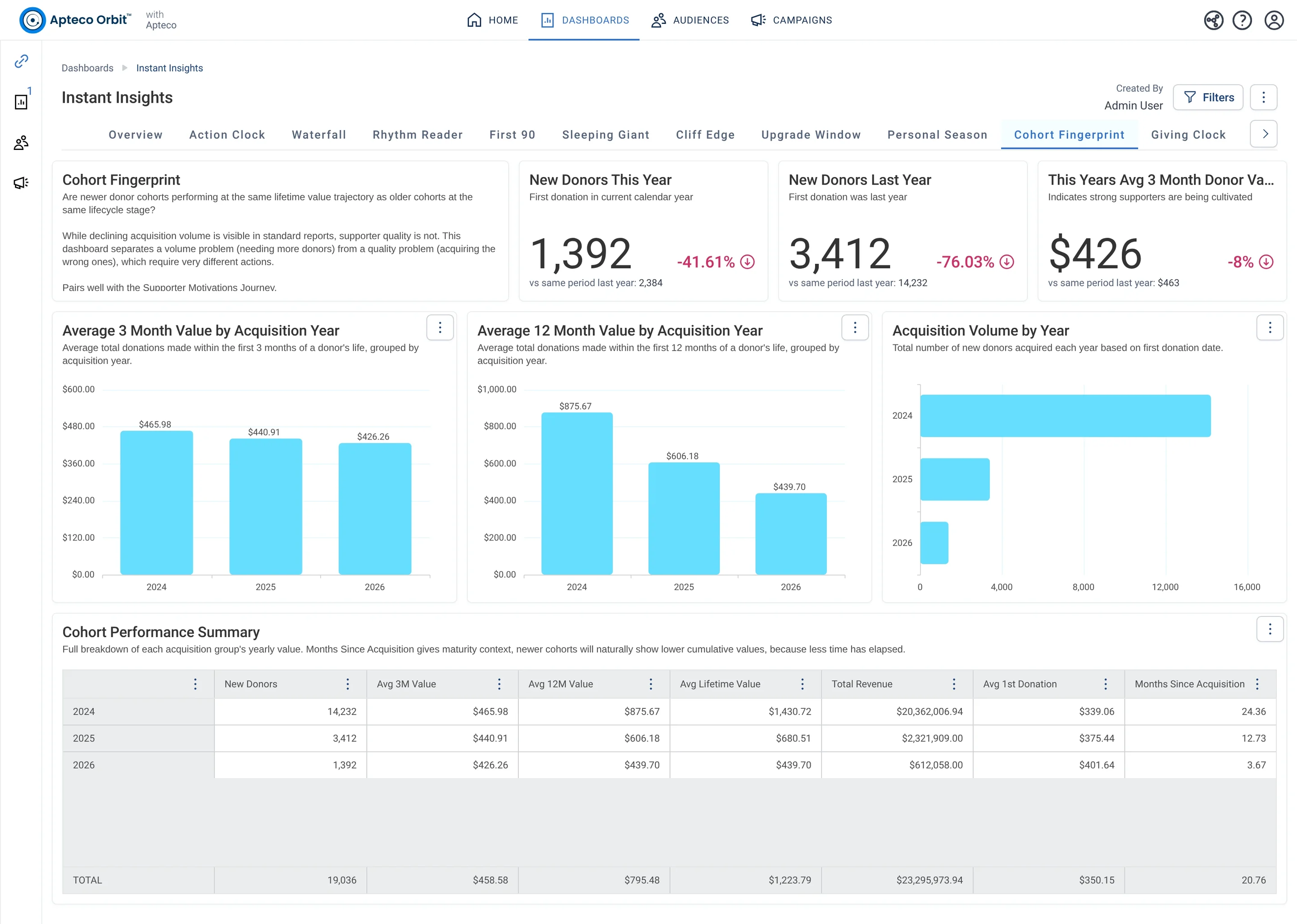
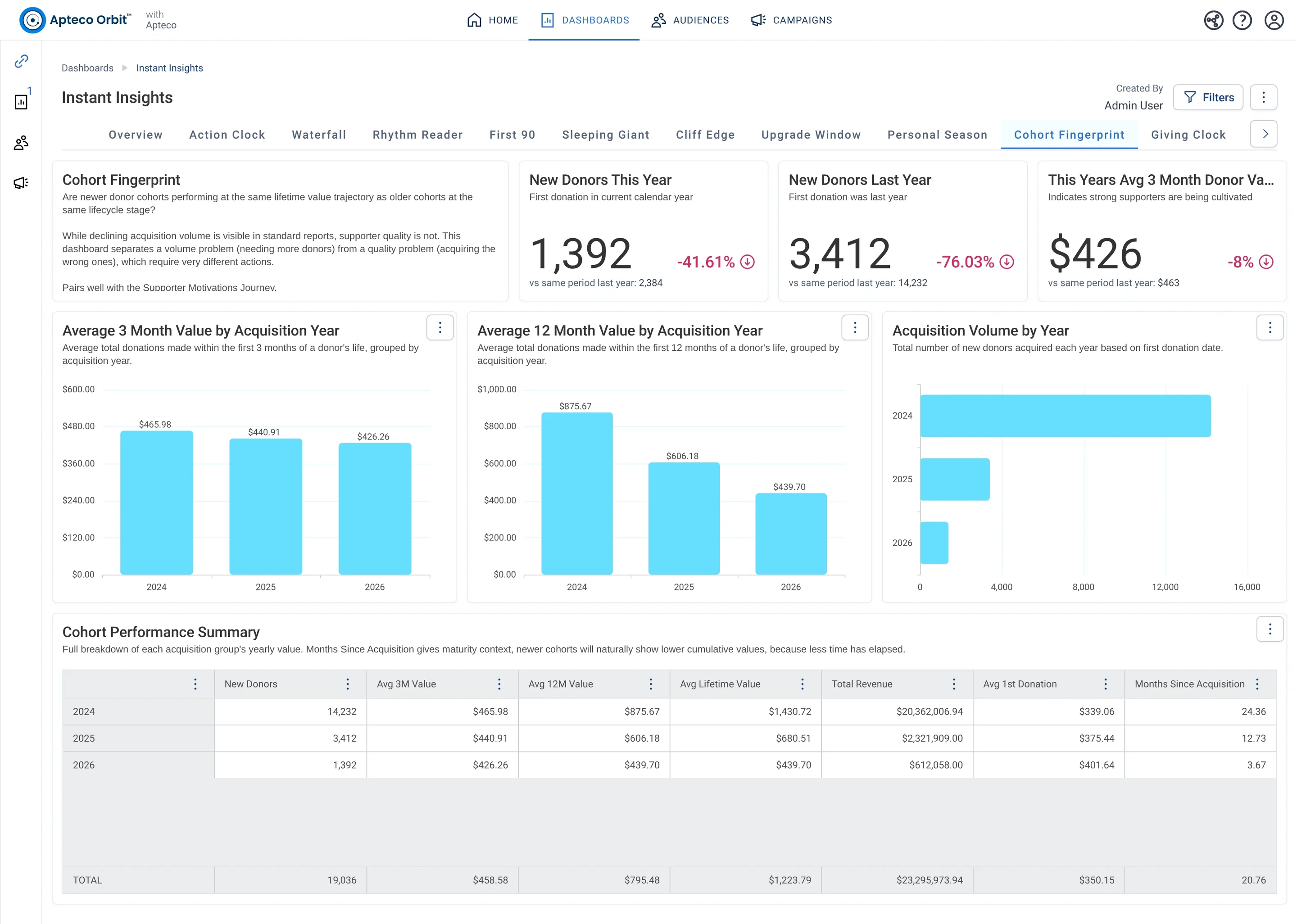
Instant Insights · Cohort Fingerprint, part 1 of 2, in Apteco Orbit: The top of the Cohort Fingerprint tab, with cards comparing donors by the year they first gave and charts of each group's early value.
Instant Insights · Cohort Fingerprint, part 1 of 2 The top of the Cohort Fingerprint tab, with cards comparing donors by the year they first gave and charts of each group's early value. A fundraiser sees whether new donors are worth more or less than past groups.

Sample charity: the people and numbers in these screens are made up, so the picture shows the tool, not a result.
The problem it solves

The real cost of a new supporter.

Why your CRM misses this. Gifts often don’t record where they came from. Even charities with analytics and ad accounts find that tagging hundreds of donation forms by hand gets abandoned, so cost per supporter becomes a guess.

Data

1 of its 3 sources usually sit outside the CRM

Signals

it reads 7 of them

Reach

3 channels: shared modules, google, meta

Journey

6 steps, start to finish

Connect: the data it draws on

Mission joins these into one record per person, beside your CRM.

Sources

Analyze: who it finds

  • Acquisition Year In which year did this supporter first give? Compare donors by the year they first gave, to measure long-term retention by source.
  • First Donation Value How much was this supporter's very first gift? Compare first gifts across the channels that brought donors in, to see which bring stronger givers from the start.
  • Donation Value First 12 Months How much did this supporter give in their first year with us? Compare donors by the year they started, to see which channels bring the highest early value.
  • Second Donation Within 90 Days Did this supporter give a second time soon after their first gift? Give these quick converters immediate stewardship, since they are the most likely to stay.
  • Campaign Name A field from Campaigns.
  • Campaign Type A field from Campaigns.
  • Donation Source A field from Donations.

Dashboard: Campaign Performance

Activate: the journey

Each step names when it happens and the channel it uses. Under the steps is the campaign as it is built in Orbit, in 2 parts. Read them in order.

  1. Every campaign

    Goal and objectives

    Each acquisition campaign gets a goal in Orbit, such as the number of first gifts by a set date, and each message counts the gifts and revenue it brought in.

  2. Every send

    Cost and ROI

    Channel costs set up in Orbit are counted on every send, so cost builds up as the campaign runs. No spreadsheet.

  3. Live

    Shared module

    A module opens straight from the published campaign with sends, recipients, responses, revenue, cost, ROI and goal progress already on it.

  4. Monthly

    Shared module

    New supporters by the campaign and source of their first gift, with first-year value and second-gift rate next to each cost, so cheap and good are not confused.

  5. Quarterly

    Shared module

    Shared with leadership as a view-only module, and exported to PDF for the finance committee.

  6. Next budget

    Google + Meta Ads

    Ad budget moves toward the campaigns and platforms whose new supporters give again.

  • Compare like with like: Acquisition Year keeps each cohort together.
  • Spend managed outside Orbit, such as an agency fee, can be entered as the investment on an ROI tile and filtered to the campaign it paid for.

The campaign in Orbit

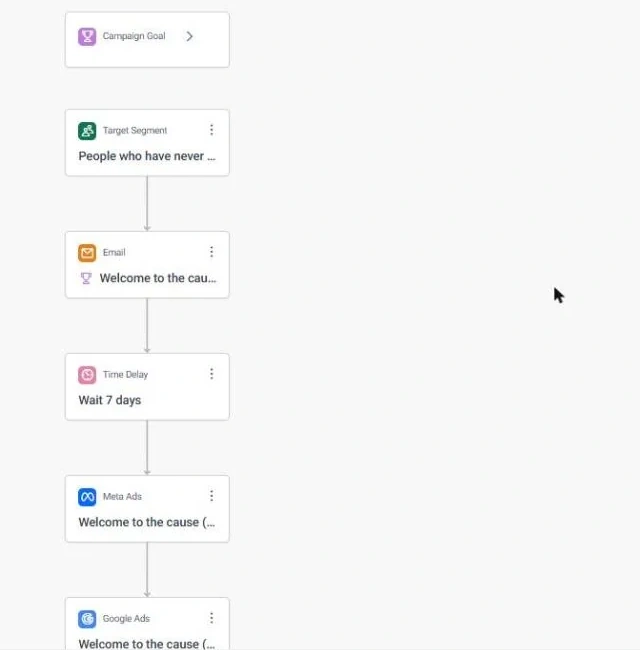
Cost to Acquire a Supporter · journey, part 1 of 2, in Apteco Orbit: The top of the journey: the goal, the People who have never given audience, the Welcome to the cause email with its trophy for an objective, a wait, then the Meta ad.
Cost to Acquire a Supporter · journey, part 1 of 2 The top of the journey: the goal, the People who have never given audience, the Welcome to the cause email with its trophy for an objective, a wait, then the Meta ad. The trophy means the email's results get measured.
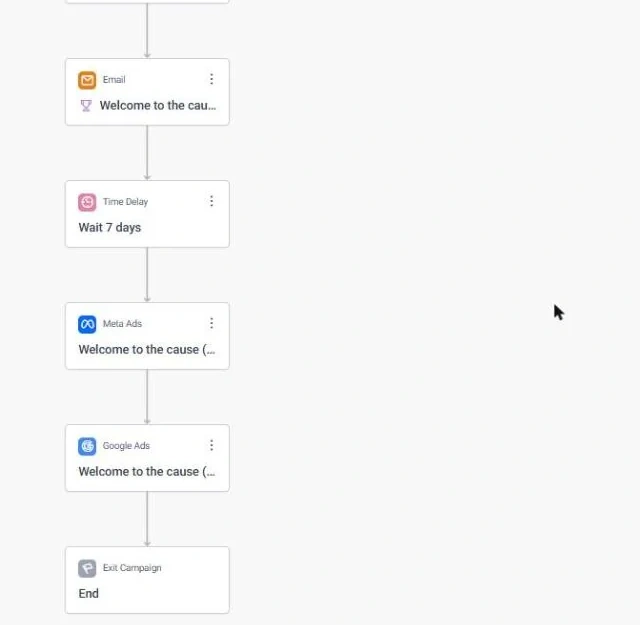
Cost to Acquire a Supporter · journey, part 2 of 2, in Apteco Orbit: The bottom of the journey: after the wait, a Meta ad and a Google ad, both called Welcome to the cause, then the end.
Cost to Acquire a Supporter · journey, part 2 of 2 The bottom of the journey: after the wait, a Meta ad and a Google ad, both called Welcome to the cause, then the end. New people see the same welcome in their feeds and searches.

Learn: what flows back

The goal shows On Track or At Risk while the campaign runs. As new supporters give again, first-year value fills in, so a campaign that brought cheap one-off givers stops looking cheap.

Results land on the same supporter record, so the next run starts from what just happened.

Where you see it in Orbit

Instant Insights · Cohort Fingerprint, part 2 of 2, in Apteco Orbit: The bottom of the Cohort Fingerprint tab, with the Cohort Performance Summary table, a row per joining year showing donors, value and first gift.
Instant Insights · Cohort Fingerprint, part 2 of 2 The bottom of the Cohort Fingerprint tab, with the Cohort Performance Summary table, a row per joining year showing donors, value and first gift. A fundraiser compares each year's new donors side by side to see which groups grew.
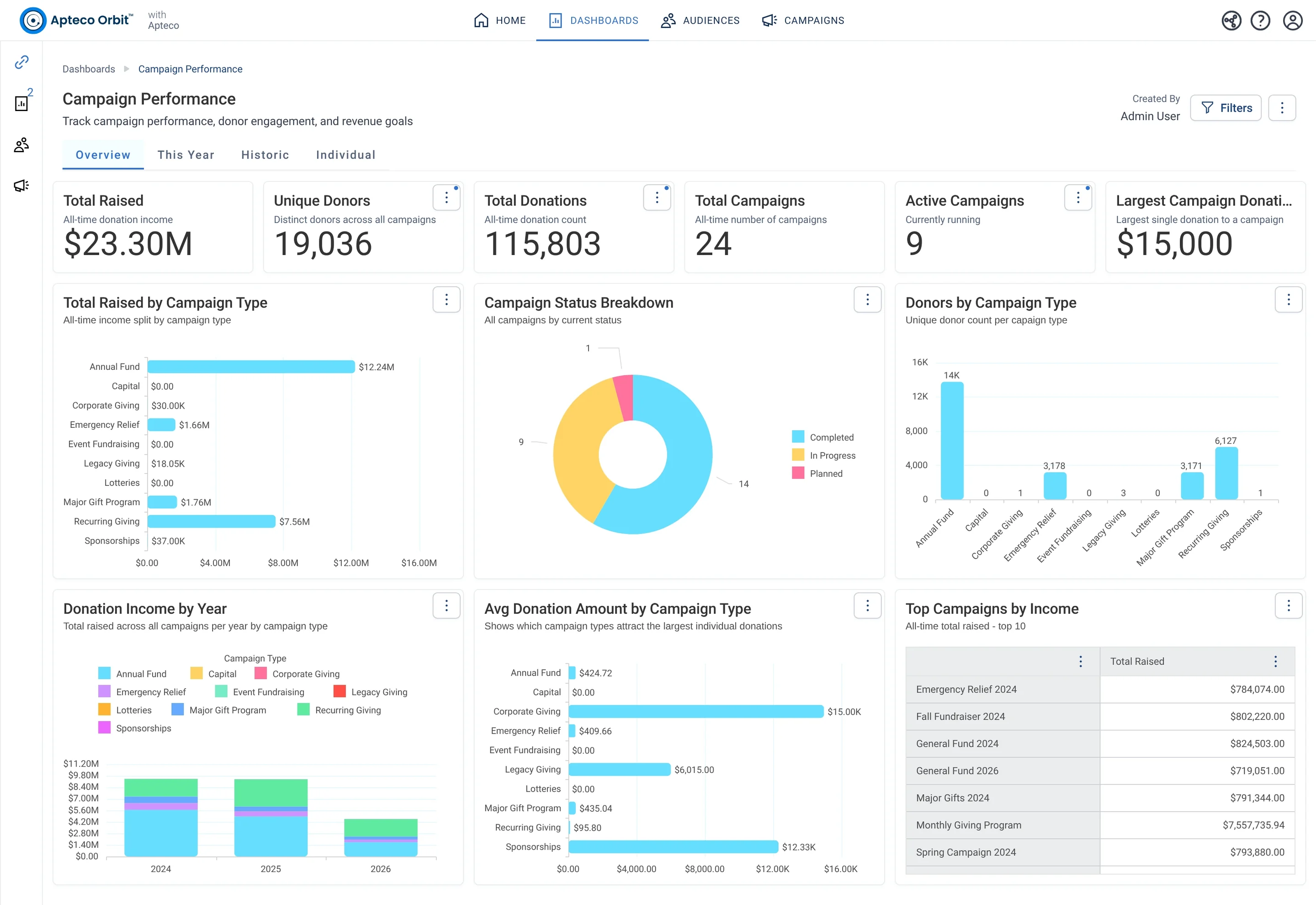
Campaign Performance · Overview, in Apteco Orbit: The Overview tab, with headline cards for all campaigns ever, charts splitting money and donors by campaign type, and a top campaigns table.
Campaign Performance · Overview The Overview tab, with headline cards for all campaigns ever, charts splitting money and donors by campaign type, and a top campaigns table. A fundraiser or board member sees which kinds of campaigns bring in the most money and donors.
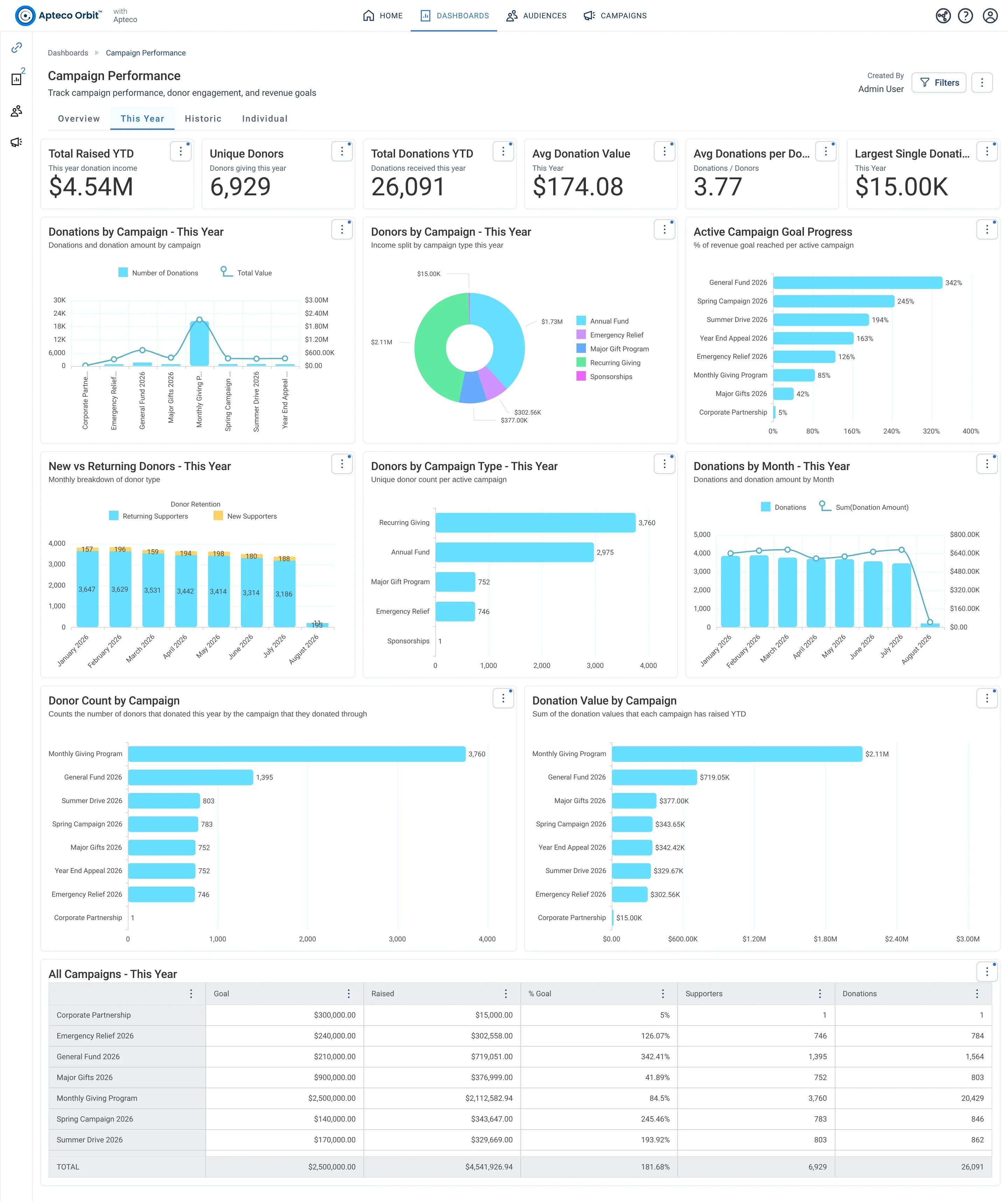
Campaign Performance · This Year, in Apteco Orbit: The This Year tab, with headline cards for the year so far, bars showing each campaign against its goal, and new and returning donors by month.
Campaign Performance · This Year The This Year tab, with headline cards for the year so far, bars showing each campaign against its goal, and new and returning donors by month. A fundraiser checks which campaigns are ahead of or behind their goals this year.

Questions people ask

What problem does Cost to Acquire a Supporter solve?

The real cost of a new supporter. What each campaign and channel really costs per new supporter, next to what those supporters give in their first year.

Which data does it need?

Donations: supporter ID, gift amount, gift date, source and campaign of each gift; Campaigns: name, type, goal revenue; Orbit campaigns: channel costs, sends and responses

Why can't my CRM do this on its own?

Gifts often don’t record where they came from. Even charities with analytics and ad accounts find that tagging hundreds of donation forms by hand gets abandoned, so cost per supporter becomes a guess.

Which channels does it use?

Shared modules, Google, Meta. Every campaign: Goal and objectives Then Every send: Cost and ROI Then Live: Shared module Then Monthly: Shared module.

Who runs it?

Leadership.

Every pathway in the Field Guide runs on Apteco Mission, beside your CRM.

See it with your own data

An Apteco Architect walks you through this pathway on your own data.

Schedule Time with an Apteco Architect