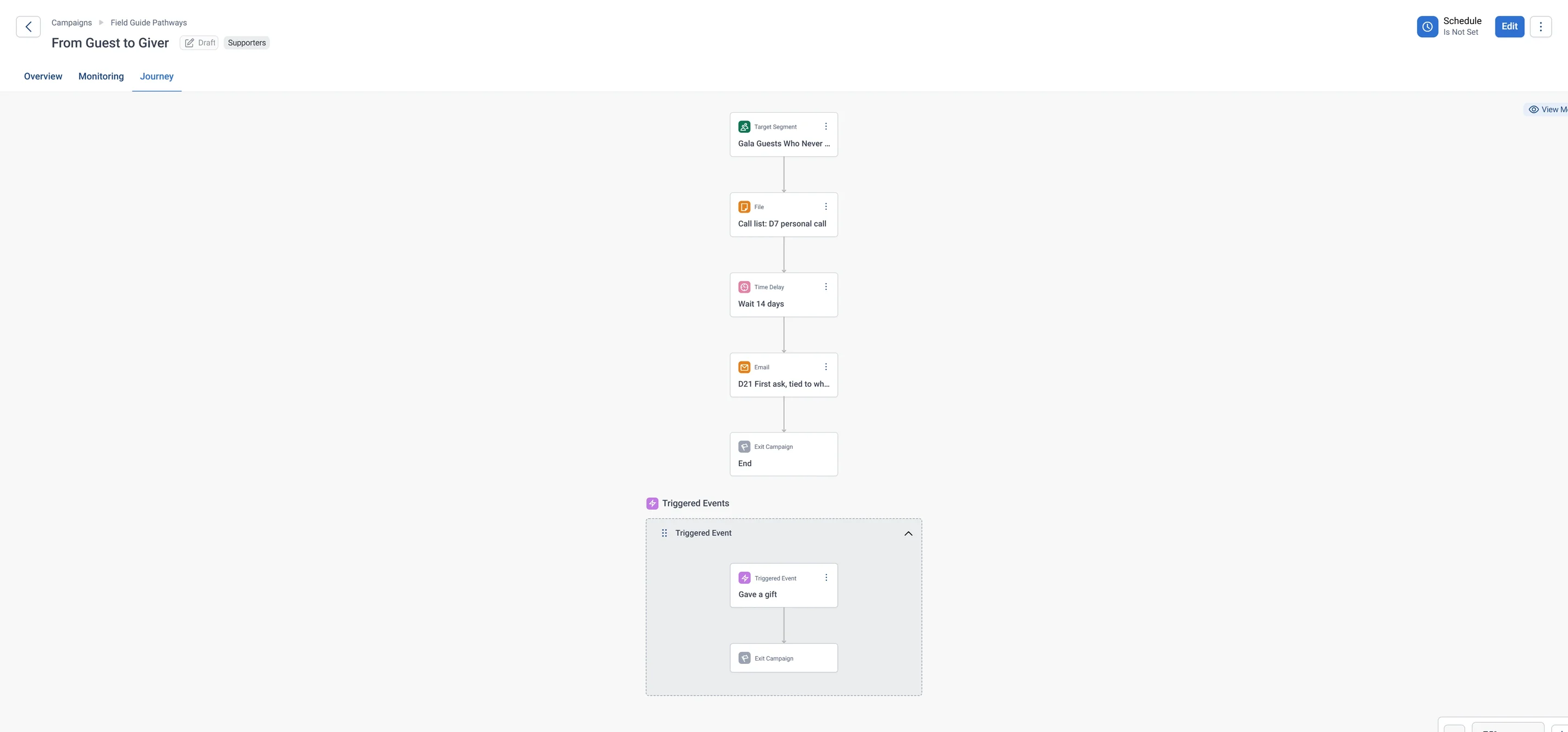
Apteco Mission takes the data from your CRM and from the other places supporters show up, like ticketing, email and spreadsheets, and matches it into one record per supporter. Its From Guest to Giver pathway then finds supporters who came to one or more events but have never made a gift, and plans a personal call and a first ask. Your CRM is where you enter things, and Mission is where you ask questions of them. The best CRM for you keeps each patron as one person.
A small performing arts group leaving its ticketing system has two paths. One is an arts platform where ticketing, CRM, fundraising and memberships are one system. The other is a donor CRM paired with a simpler ticketing tool. Choose the path first, then the product. There is no single best one.
Path one: one arts platform. Spektrix brings ticketing, CRM, marketing, fundraising and memberships together, and works with arts groups in the US and Canada. Tessitura says it is built to run a whole arts and culture organization, with CRM, ticketing, fundraising and memberships in one product. These suit a group with its own venue and a full season to sell, where the box office and the development team need the same patron record.
Path two: a donor CRM plus ticketing. A donor CRM keeps gifts, thank-yous and donor history, and a ticketing tool sells the seats. Some tools do both for small groups: Zeffy offers ticketing, memberships and a donor CRM, paid for by optional donor tips. This path suits a company with a few shows a year and no venue of its own. Ask each vendor how ticket buyers get into the CRM, and how often.
Before you leave your ticketing system. Your ticket history is donor history. It shows who comes often, who buys for a group and who has never been asked to give. Before your contract ends, export everything: patrons, orders, performances attended, gifts, memberships and email consent. Ask for it in a file you can open, like a spreadsheet. Check that it opens and holds every season before you switch off the old system.
Questions for every demo. Will a ticket buyer who later gives be one record, or two? Can we see what a person has attended next to what they have given? How do memberships and subscriptions renew? Can you load our old ticket history, and who does that work? If we leave you one day, how do we get our data back?
Using your ticket history. Apteco Mission joins attendance that sits in ticketing tools, a box office or paper sign-in sheets with your gifts, then plans the follow-up. If you'd rather have a hosted donor CRM, Apteco hosts CiviCRM. It keeps contacts, gifts, events, volunteers and grants in one place. Either way, your CRM can stay: Mission sits underneath it.