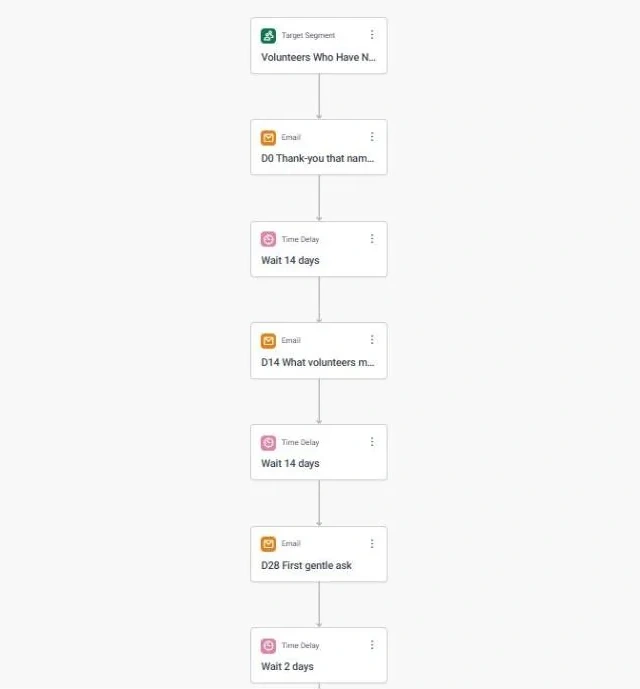
Apteco Mission keeps volunteers and donors on one record per person, and its Volunteers Who Have Never Given pathway asks volunteers who have never given to give, the right way. It reads volunteer timesheets, gifts and email addresses together. The journey starts with a thank-you that names the hours they gave, then a story of what volunteers made possible, then a first, gentle ask that respects their time. It sits beside the system you already use and leaves it as it is (see Does Apteco Mission replace my CRM?) and keeps your team's way of working as it is. Trainees need the same care: keep them in the database where gifts live, with what they did and when.
Why they are worth the effort. People who gave you their time already know your work from the inside. In a 2020 Fidelity Charitable survey of American donors, 39 percent of those who volunteer said they are more likely to volunteer first and give later. Trainees can follow the same path. A case study in India Development Review tells of a scholarship charity whose alumni giving did not work in its early years "because we never asked." Once it built a proper alumni list, kept it current and asked, the number of alumni who gave grew from 195 to 1,538 over about eleven years.
Step 1: one record, not a separate list. Don't keep alumni in a spreadsheet of their own. Add them to the database where gifts live, so a gift, a shift and a program all sit on the same person. Keep their name, a personal email (a work or school email stops working when they move on), phone, mailing address, how they want to hear from you, and the date they said yes. Add a simple marker, like "Program alumni" with the year, or "Former volunteer" with their role and hours. Mark people as former. Don't delete them. Volunteer Canada's Canadian Code for Volunteer Involvement asks for a record for each volunteer, kept in a confidential, secure system that respects their privacy.
Step 2: ask before they go, and keep it current. The last day of a program, or a volunteer's exit chat, is the best time to ask, "Can we keep in touch?" The same Code suggests an exit interview for each volunteer, and says taking part is their choice. In Canada, the anti-spam law treats volunteer work for a registered charity as implied consent to email for two years after the work. And its regulations exempt an email from a registered charity whose main purpose is raising funds. Rules differ by country and by message, so check your own. Either way, asking is kinder, and the answer is on record. Once a year, send a short note asking if their details are still right.
Step 3: thank, show, then ask. Start with a thank-you that names what they did: the program they finished, or the hours they gave. Then send news of the people who came after them. Offer ways to help that are not money: mentor a new trainee, speak at an orientation, come back for one shift. The scholarship charity in the case study also asked its alumni to mentor and to refer new students, not only to give. When you do ask for money, keep it small and specific, and tie it to the next group. Never make anyone feel they owe you for the help they got.
Apteco Mission can hold a volunteer's hours and gifts on the same person, even when the volunteers live in a separate platform or spreadsheet. If you would rather keep it all in one CRM, Apteco hosts CiviCRM.