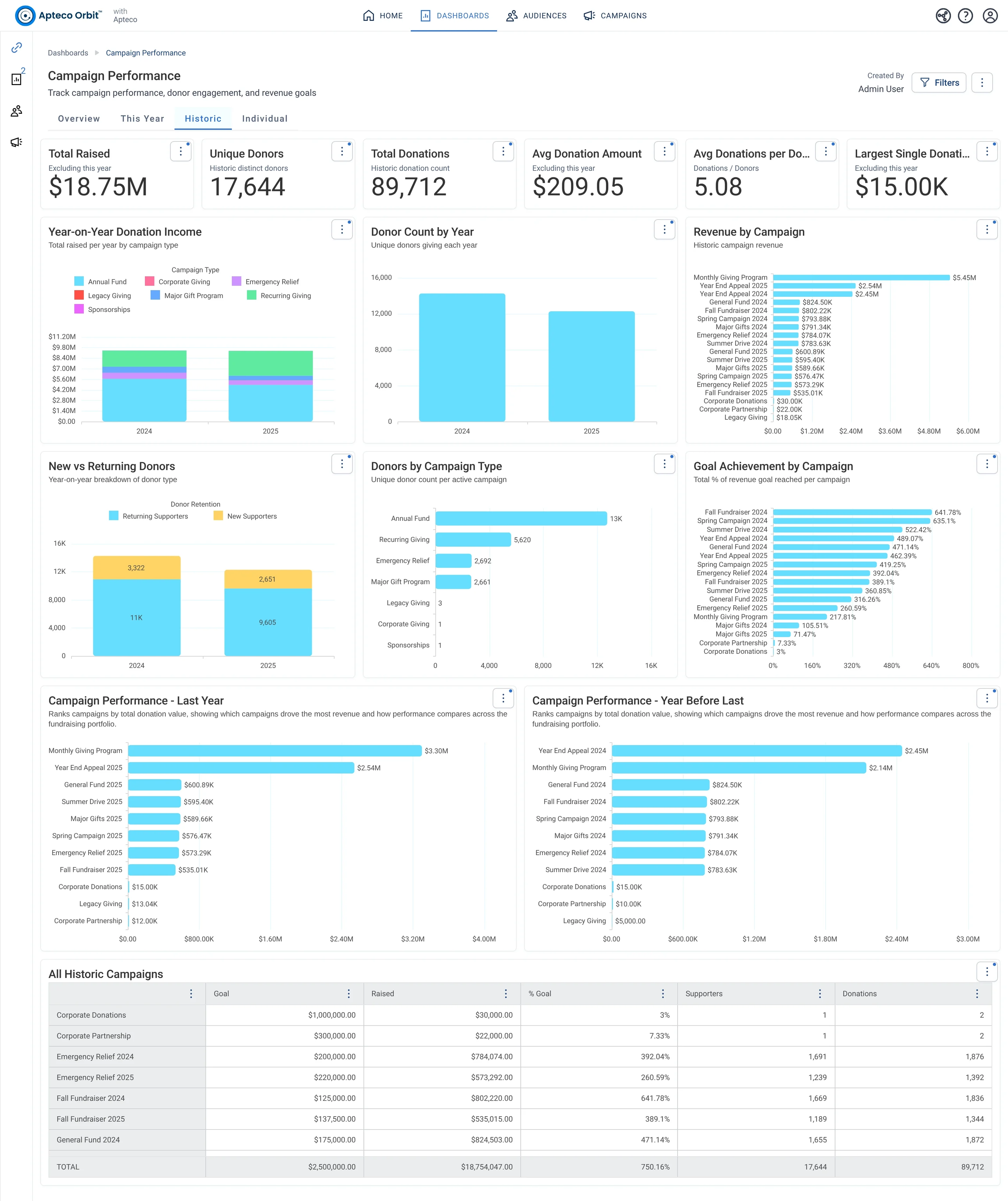
Apteco Mission puts the results side by side. Its Channel Effectiveness pathway shows response, gifts, revenue and cost by channel and campaign type each month. It also tests subject lines and content on a sample before the full send. So you see which channels win the first gift, and which channels keep supporters.
The straight answer: test each idea against what you do now, on your own donors. Split a list at random. One group gets the new idea. The other gets your usual approach. Decide before you start what counts as working, such as gifts, average gift, or a second gift a few months later. Then compare the two groups. A random split is the fair way to know the idea caused the change.
Medicine and some governments use the same method to find out what works. The UK Cabinet Office paper Test, Learn, Adapt, written with its Behavioural Insights Team, explains that a randomly assigned control group lets you compare a new approach with what would have happened if you had changed nothing. It calls randomised trials the best way to tell whether a policy or intervention is working.
Why other ways mislead. Comparing this year with last year mixes in everything else that changed: the economy, the mail date, a big news story. Comparing people who chose to respond with people who didn't tells you about the people, not the idea. Advice from other charities is a good place to find ideas, but their donors are not yours.
How to run a test. First, pick one change, like a new ask amount, a thank-you call or a different subject line. Next, choose the measure before you send. Then split the list at random, not by region or by who looks likely. Send both versions at the same time. Wait long enough to see the result, then compare. Write down what you learned, even when the new idea loses.
Tools that help. Most email platforms make small tests easy. For mail, give each version its own appeal code, so every gift lands in the right group. For mail, a QR code or a web address used only on that piece shows which gifts it drove. Pick one way of counting at the start of the year and keep it, so the results stay comparable.
Measure past the first gift. An idea can raise more today and keep fewer donors next year. Look again months later: who gave again, and who stopped. The Fundraising Effectiveness Project defines donor retention as the share of people who gave in a prior period and gave again in the current one. That makes a fair yardstick for each test group.
The long view is the hard part, because the gift, the email and the event live in different systems. On the Channel Effectiveness page, Mission records who got each message, and each message counts the gifts and revenue it brought in. Each quarter it shows the second-gift rate and first-year value by the channel that brought each supporter in.