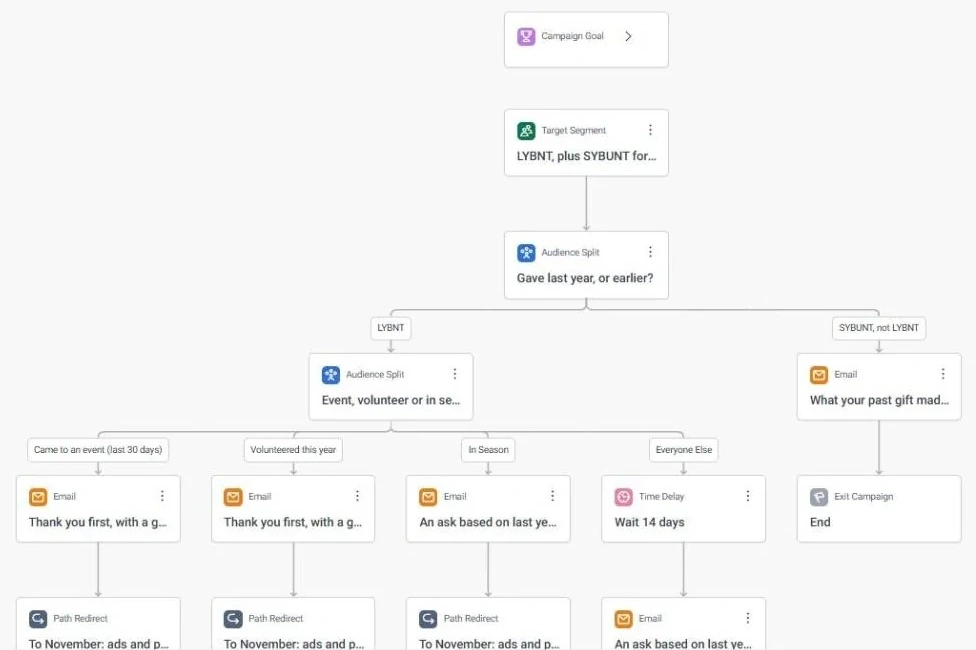
Apteco Mission builds your year-end list from every gift, so the last-week ask goes to the right people. The Year-End Recovery pathway says LYBUNT reports only count gifts the CRM holds. A gift made on another platform doesn't show, so the list can chase people who already gave. In December, those still flagged get a final-weeks reminder by text and email.
The last week is big. In the 2026 M+R Benchmarks study, nonprofits got 37% of their 2025 online revenue in December. The last week of the year brought in 10% of the whole year's online revenue. That is more than a quarter of December's online giving, in seven days. December 31 alone brought in 4%. Plan an ask for that week.
Online gifts bunch up more than gifts overall. M+R counts online gifts only. Across every channel, the 2025 Trends in Giving study found 36.1% of annual revenue arrived from October to December, and December alone brought about 18%. So your own share depends on your mix of mail, online and major gifts.
Why donors give so late. The tax year ends on December 31. In the US, the IRS says a cheque you mail is counted as given on the day you mail it, and a credit card gift counts in the year it is charged. In Canada, the CRA treats the postmark on the envelope as the date of a mailed gift. It asks the charity to keep the stamped envelope.
Check your own pattern first. Pull every gift from the last three Decembers, from every place gifts arrive. Count what came in from Christmas Eve to New Year's Eve. Compare it with all of December and the whole year. Then look at who gives in that week, year after year. Those are the people a last-week ask is for. Do this looking back before the campaign, not after it. Many charities only ask in the new year who they kept, lost or won back, when it is too late to act on it.
Plan the last week. Send your main appeal earlier in December. Then plan a few short reminders for the final days, by email and, if people agreed to it, by text. Make sure someone checks the donation page and the payment system over the holiday. Take out anyone who has already given, so a donor who gave yesterday doesn't get a last-chance email today. Thank each gift within a day or two.
Who gets the ask. The Year-End Recovery pathway removes anyone who gives from every remaining step, including the ad audiences. Mission's Right Month, Right Ask pathway asks people in the month they usually give, and leaves them alone in months they never do. That helps you tell your December givers from everyone else.