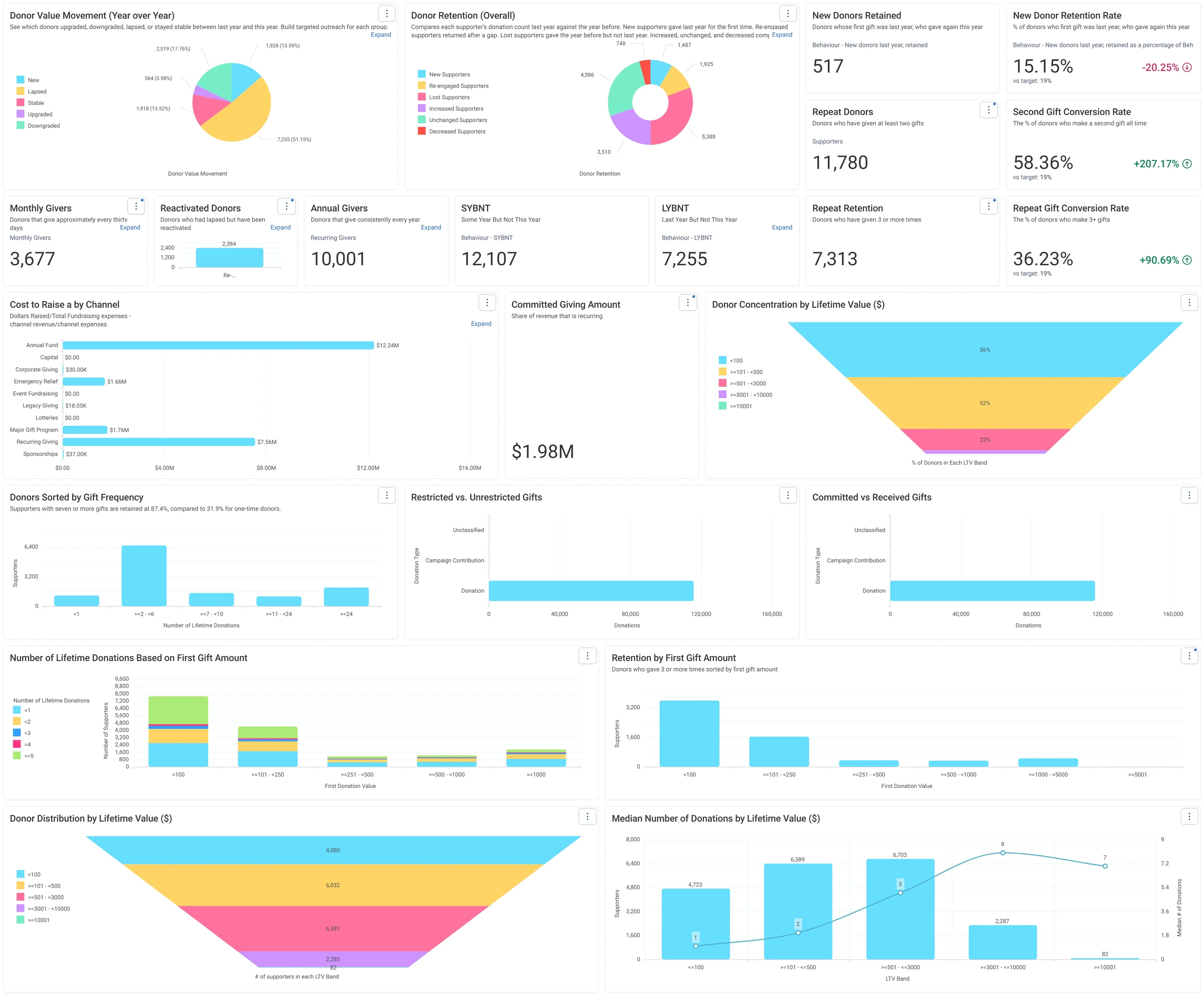
Apteco Mission does the joining that these numbers need. It brings gifts from your CRM and the other places they arrive into one record per person, beside your CRM. The The Board Pack That Builds Itself pathway then keeps Retained donors, Donor Movement and Donor Status up to date, and Same Period Last Year for fair comparisons. It says the numbers your board asks for are gathered from every system and ready before every meeting.
Track a short list that shows whether you are keeping donors, not just how much came in: total raised, number of donors, donor retention (overall, new and repeat), average gift, who gave more or less, and lapsed donors who came back. Count them the same way every year, so this year compares fairly with last year.
Use the sector's own definitions, so your numbers mean what other charities' numbers mean. The Fundraising Effectiveness Project defines donor retention as the share of people who gave in a prior period and gave again in the current one. New donor retention looks only at people whose first gift was in the prior period. Repeat donor retention looks at everyone else. A lapsed donor gave in the prior period but not in this one.
Why not just dollars? Dollars can rise while the donor base shrinks. In 2025, giving in the Fundraising Effectiveness Project's data grew an estimated 5.0%, while the number of donors fell an estimated 3.6%. Overall retention edged up from 43.1% to 43.3%. A board that sees only the total can miss that fewer people are giving.
The short list. Total raised. Number of donors. Overall retention. New donor retention. Repeat donor retention. Average gift. Donors who gave more, and donors who gave less. Lapsed donors who came back. If you track costs, add the cost to raise a dollar in each channel.
How to get them from your records. First, fix your period, usually your fiscal year, and keep it. Second, put every gift in one list: the CRM, each giving platform, event ticketing and any old database. Third, match people, so a donor who gave by cheque and online counts once. Fourth, decide what counts, like pledges, soft credits and event tickets, and write the rules down. Last, run the same steps each time. Then fix a date each quarter when the numbers go out, so the team isn't pulling them by hand every time.
What your CRM covers. Standard CRM reports cover part of this list. CiviCRM has a LYBUNT report for donors who gave last year but not this year. Apteco hosts CiviCRM for charities that want it run for them. The hard part is usually the second and third steps: gifts that live in other systems, and the same person on two records. Mission's Charity Overview shows donor movement and retained donors in one place.