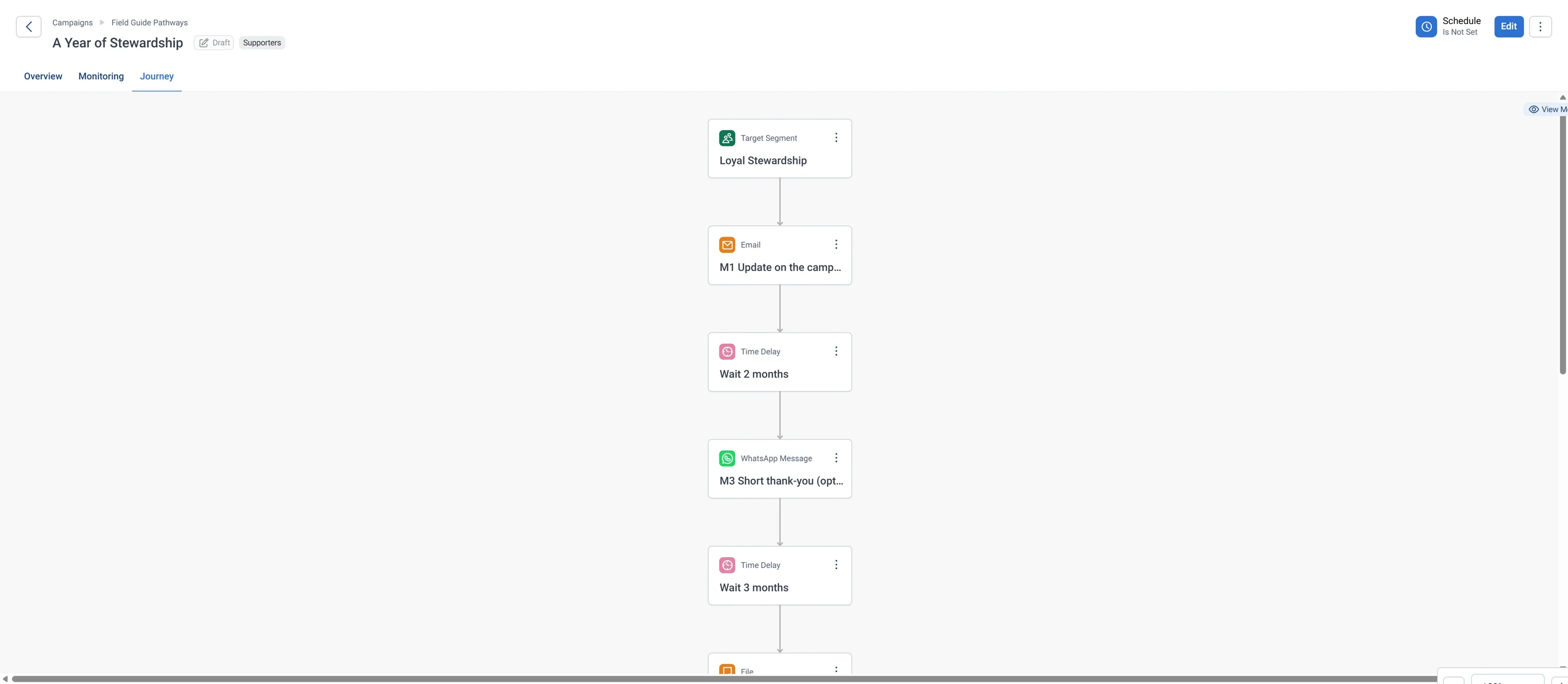
Apteco Mission keeps your most loyal supporters hearing about their impact all year, not only when you need something. Its A Year of Stewardship pathway sends them an update tied to the campaign they gave to, then a thank-you, a card, an invitation and a call. So the report is not the only time they hear from you. For the report itself, most charities use one of four kinds of tool.
The four kinds. A page on their own website. A design tool, like Canva or Adobe Express, to lay out a PDF or a simple web page. A story builder, like Shorthand, for a report people scroll through, with photos and video. Or plain email, with a PDF attached or the report in the message. Any of them works. The slow part is gathering the numbers and stories, not the layout.
Design tools. These suit a small team that wants a good-looking PDF or a one-page site, fast. Style Factory's review of Canva for Nonprofits says it is free for eligible organizations, for up to 50 team members, and its templates include impact reports. Adobe Express for Nonprofits gives verified nonprofits a free year of its Premium plan, for up to 50 people, and has annual report templates.
Story builders. These suit one flagship report a year that you want people to scroll, with photos, video and charts. Shorthand says it replaces static PDF annual reports with mobile-friendly stories, built without developers. You can download a finished story and host it on your own site. Its collection of donor impact reports shows what other charities and universities made with it.
Your own website, or a PDF. A page on your own site is free, easy to find and easy to update. A PDF is still the simplest of all. Candid moved its own report from print to a PDF, sent by email and posted on its website. It had tried a mini-website first, and found it nearly as slow and costly as print.
What to put in it. Shorthand's guide says strong donor impact reports thank donors, tell the stories of the people involved, and show the numbers with visuals. Keep the numbers few and honest: what you set out to do, what happened, and what it cost. Tell donors what gifts like theirs made possible.
The slow part is the data. Start from the reports you already make and work backwards: list each number, where it is collected and who pulls it. Someone has to pull gift totals from the CRM, online gifts from the giving platform, grant dates from a spreadsheet and counts from the program team. Apteco Mission is not a design tool. It joins your CRM and the other places supporter data lives into one record per person (Apteco FAQ). Its Funder Reporting and Stewardship pathway lists every funder report coming due, flags any past due, and sends each funder an impact update by email before the formal report is due.