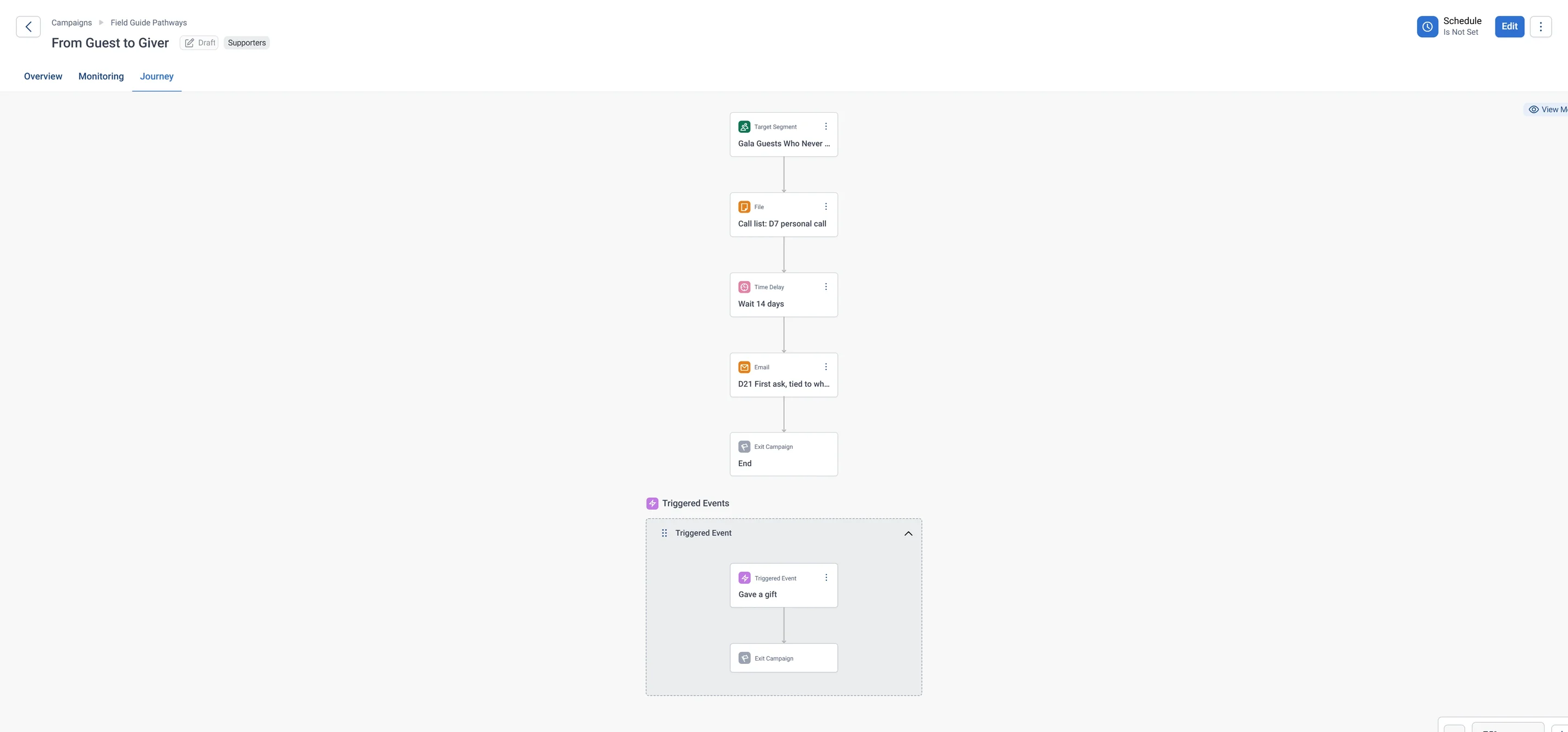
Apteco Mission takes data from your CRM and the other places supporters show up, such as your giving platform, and matches it into one record per supporter. If your tools already work for you, there is no reason to rip and replace them. It leaves your CRM as it is. The From Guest to Giver pathway shows what that gives an event: guests who have never given get a personal follow-up and an easy first ask.
The match itself starts with the shape. The event is one campaign, with teams and fundraiser pages under it. Each gift goes to the person who paid. The fundraiser whose page they gave on gets a soft credit. Match both people to records you already have. Keep the platform's own gift ID on every gift. Then compare your CRM's totals with the platform's each week until they agree.
Hard credit and soft credit. When a supporter gives through a fundraiser's page, the supporter gets the hard credit and the fundraiser gets the soft credit. Some connections send only the hard credit until you turn soft credits on (Fundraise Up). Then your best fundraisers look like they raised nothing. Check what your connection sends before the event starts.
Build the campaign in layers. A Salesforce community guide suggests a parent campaign for the event, a child campaign for each team, and one under that for each fundraiser's page. It soft credits every gift to the fundraiser who raised it (Salesforce Open Source Commons). Other CRMs use campaigns, appeals or funds the same way. Keep the names the same each year, so you can compare this year's event with last year's.
Match people, don't just add them. Fundraisers and their donors are often in your CRM already. The same guide advises creating or matching a record for each fundraiser. Match on email first, then on name with an address or phone. A fundraiser who is also a monthly donor should be one person, with both stories on one record. Send unsure matches to a person to check.
Make the money agree. Store the platform's gift ID and page ID on each gift, so a file sent twice never makes a second gift. Each week during the event, compare each team's total on the platform with your CRM. After it closes, match the platform's payouts to the gifts in your CRM. Offline gifts, like cash handed to a walker, need a page ID too, or they credit nobody.
Then use what you learn. A fundraiser who asked their friends to give is ready for a deeper connection. Those friends are new donors with a link to someone you know. Our article on what your donation page knows shows how each system holds only part of a donor's story. Mission matches the parts into one record per supporter.