Which new supporters will give a second time? These supporters have given once and are still in the window for a second gift. A faster second gift is strongly associated with long-term retention.
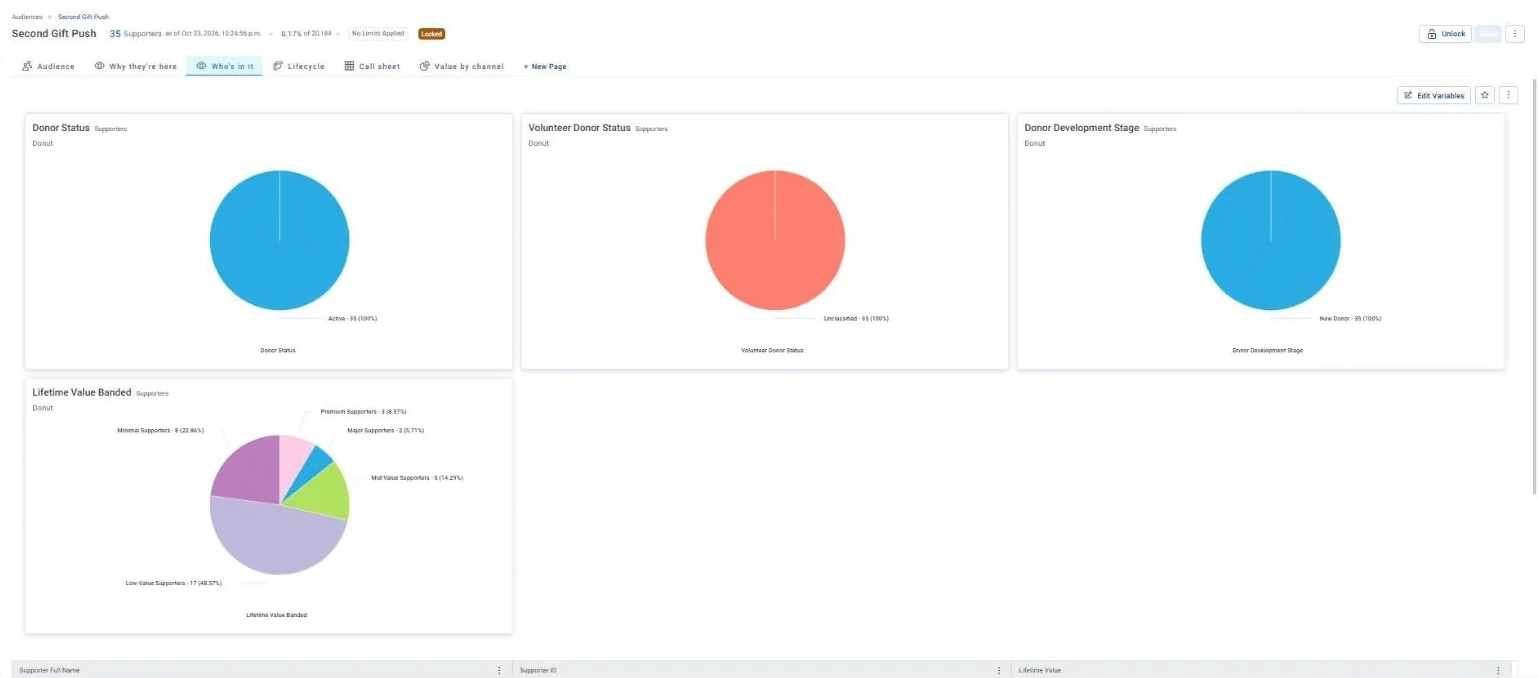
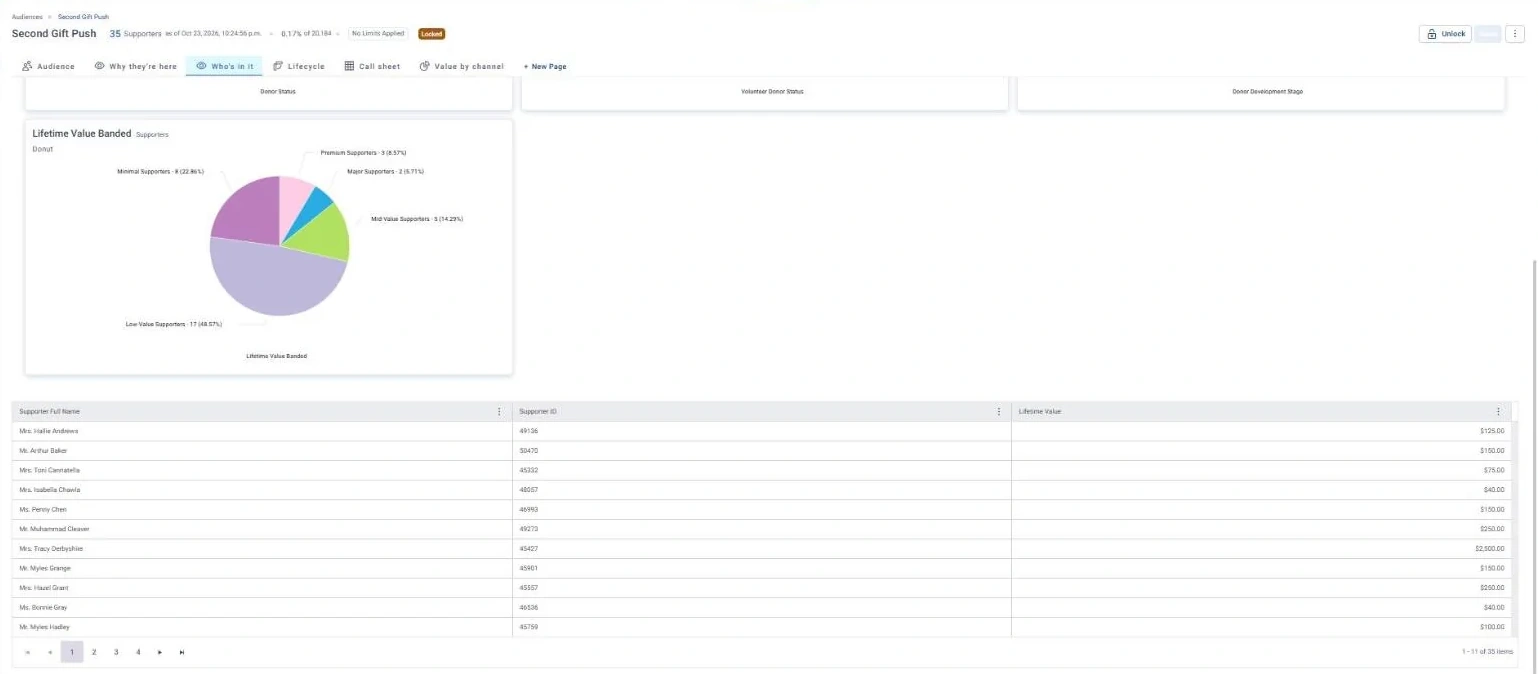
Second Gift Push · Who's in it, part 1 of 2 The first half of the Who's in it tab: donuts of donor status, volunteer status, donor stage and lifetime value. Everyone is a new, active donor, and a few started with a big first gift.Second Gift Push · Who's in it, part 2 of 2 The second half of the Who's in it tab: the lifetime value donut and a table of names and lifetime values. A fundraiser can spot the bigger first gifts and thank those people personally.
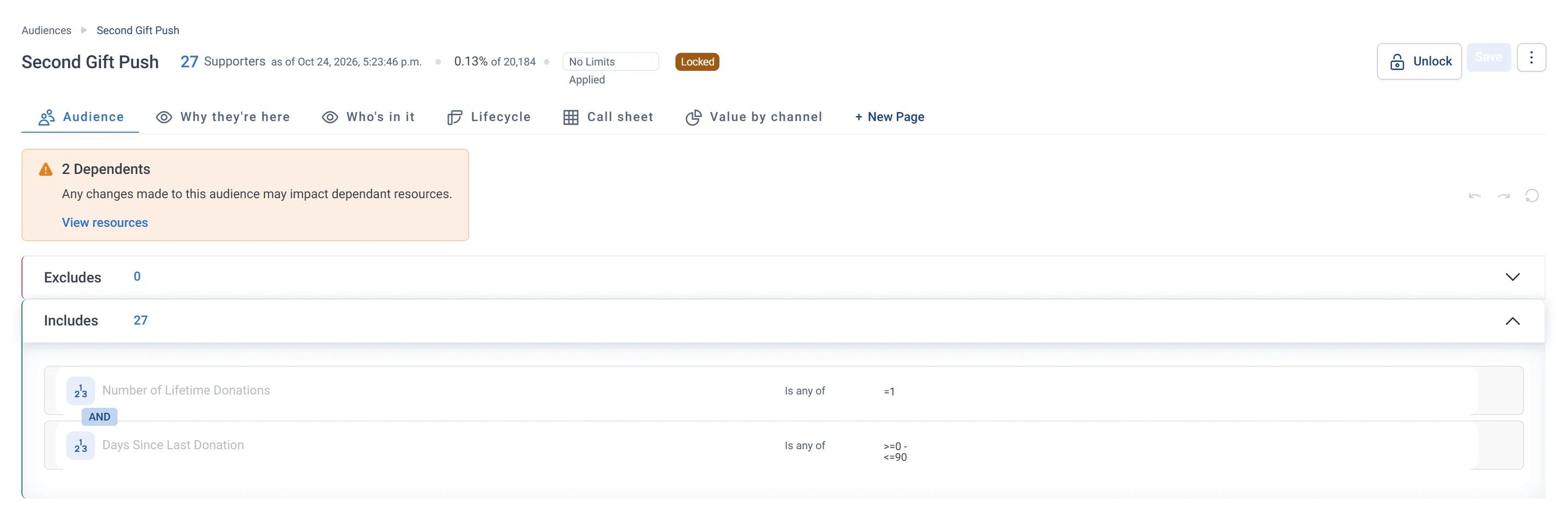
Second Gift Push · Audience rules The rules tab: two rules under Includes, a single gift made and that gift within the last few months. It gathers brand-new donors to ask for a second gift while they still feel close to the cause.
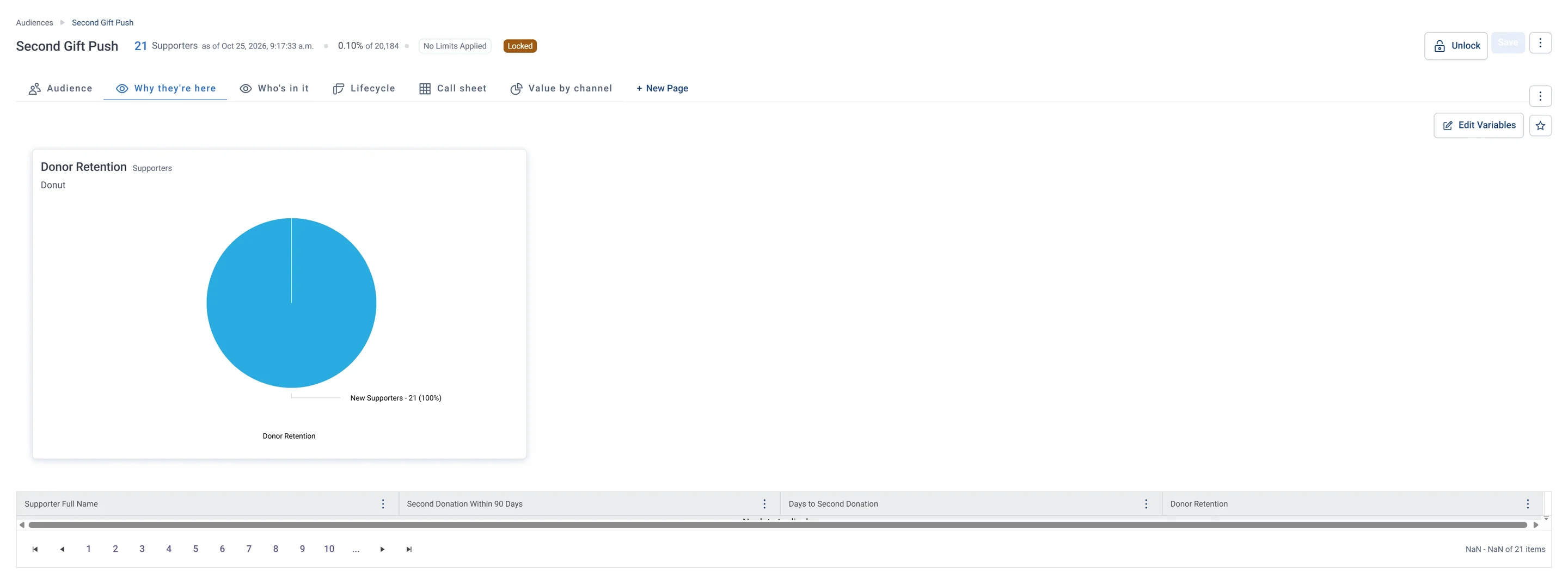
Second Gift Push · Why they're here The Why they're here tab: a donut of Donor Retention and a table of second-gift fields. Everyone is a New Supporter with no second gift yet, so a fundraiser can send a quick second ask.
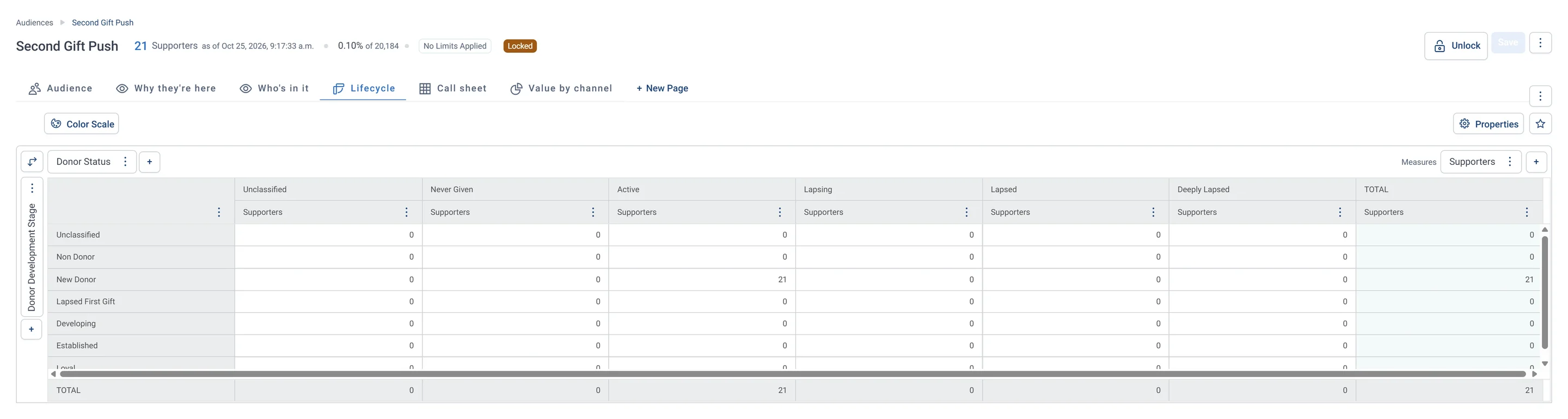
Second Gift Push · Lifecycle The Lifecycle tab: a grid of donor stage against donor status. Everyone sits in one cell, New Donor and Active, so one simple second-gift message fits the whole group.
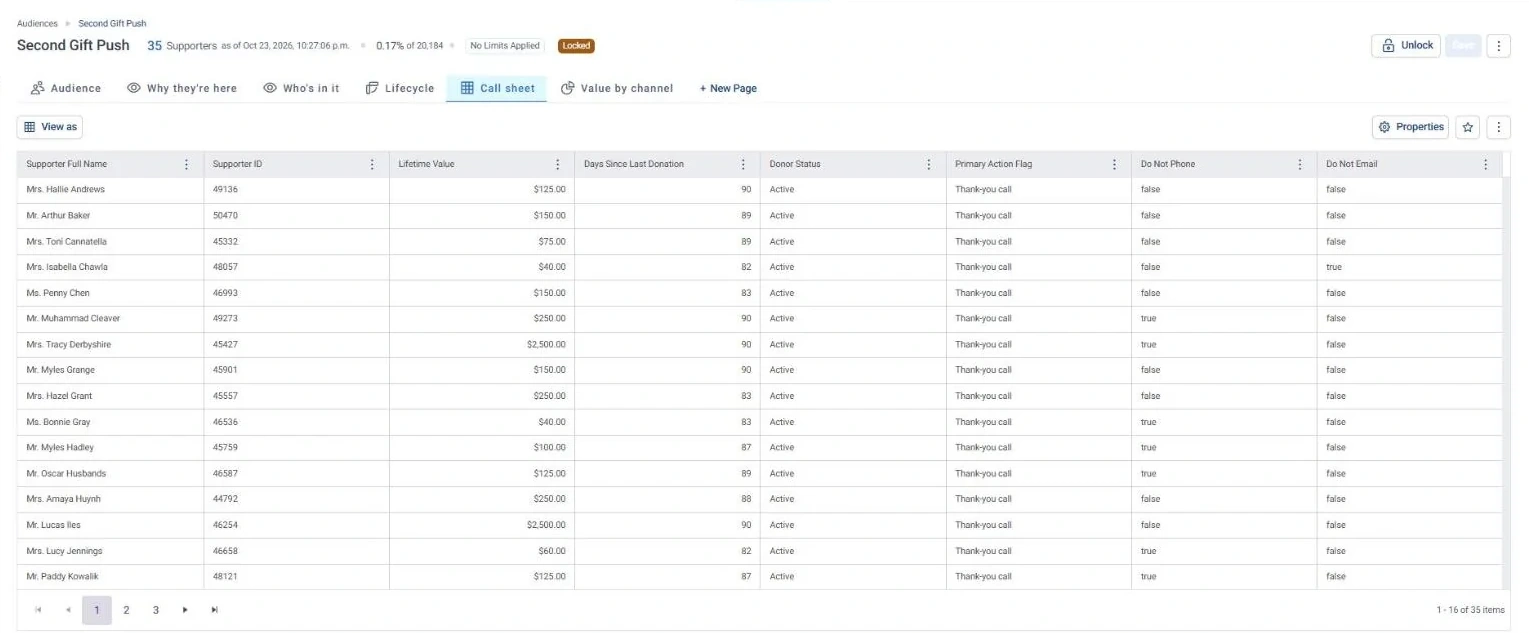
Second Gift Push · Call sheet The Call sheet tab: names, lifetime value, days since last gift, a suggested next step and contact flags. Every next step is a Thank-you call, so staff call to say thanks and invite a second gift.
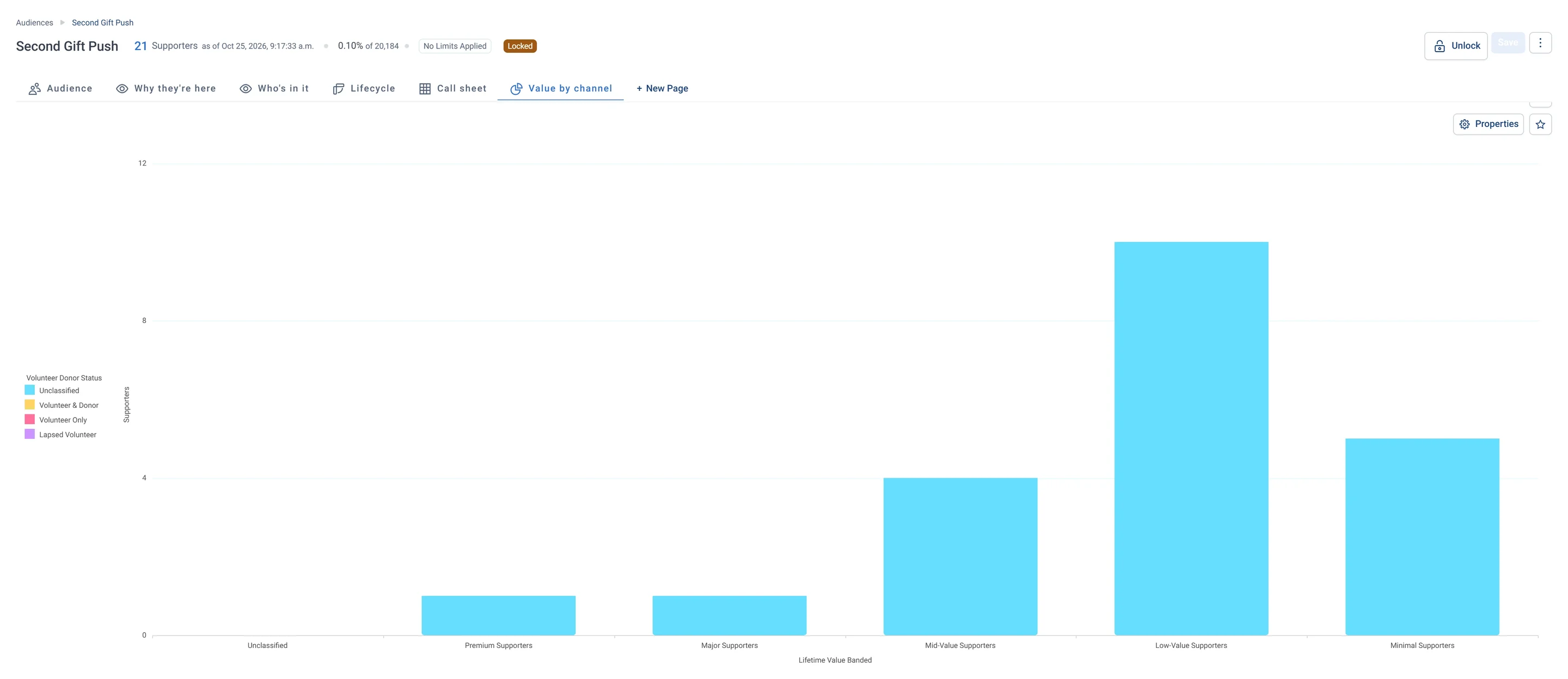
Second Gift Push · Value by channel The Value by channel tab: bars of lifetime value band, with no volunteers among them. Most first gifts are small, so a simple second ask fits most of this list.
Sample charity: the people and numbers in these screens are made up, so the picture shows the tool, not a result. The Audience tab is Orbit's own. The other tabs are views added to this audience's workbook; Get to know the list shows how to add them.
Who is in it
These brand-new donors are the people to ask for a second gift while they still feel close to the cause. The audience is locked because 2 other items depend on it.
3
insights it is built from
Keep
its tab on the Field Guide Audiences dashboard
1
pathway runs it
Second Gift Push · Audience rules The rules tab: two rules under Includes, a single gift made and that gift within the last few months. It gathers brand-new donors to ask for a second gift while they still feel close to the cause.Second Gift Push · Why they're here The Why they're here tab: a donut of Donor Retention and a table of second-gift fields. Everyone is a New Supporter with no second gift yet, so a fundraiser can send a quick second ask.
What to do next
Send a second ask within 60 days of the first gift. Reference their first gift specifically.
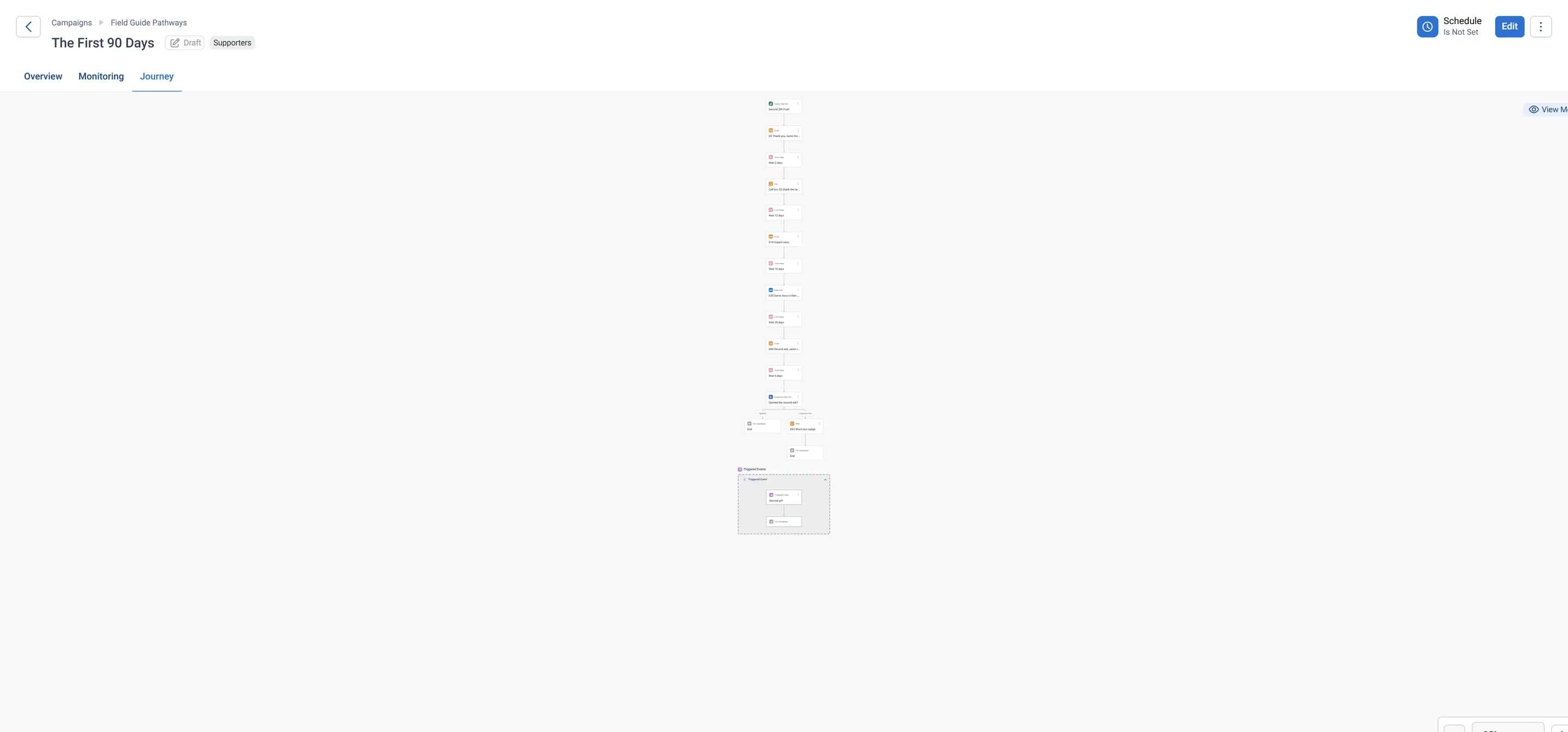
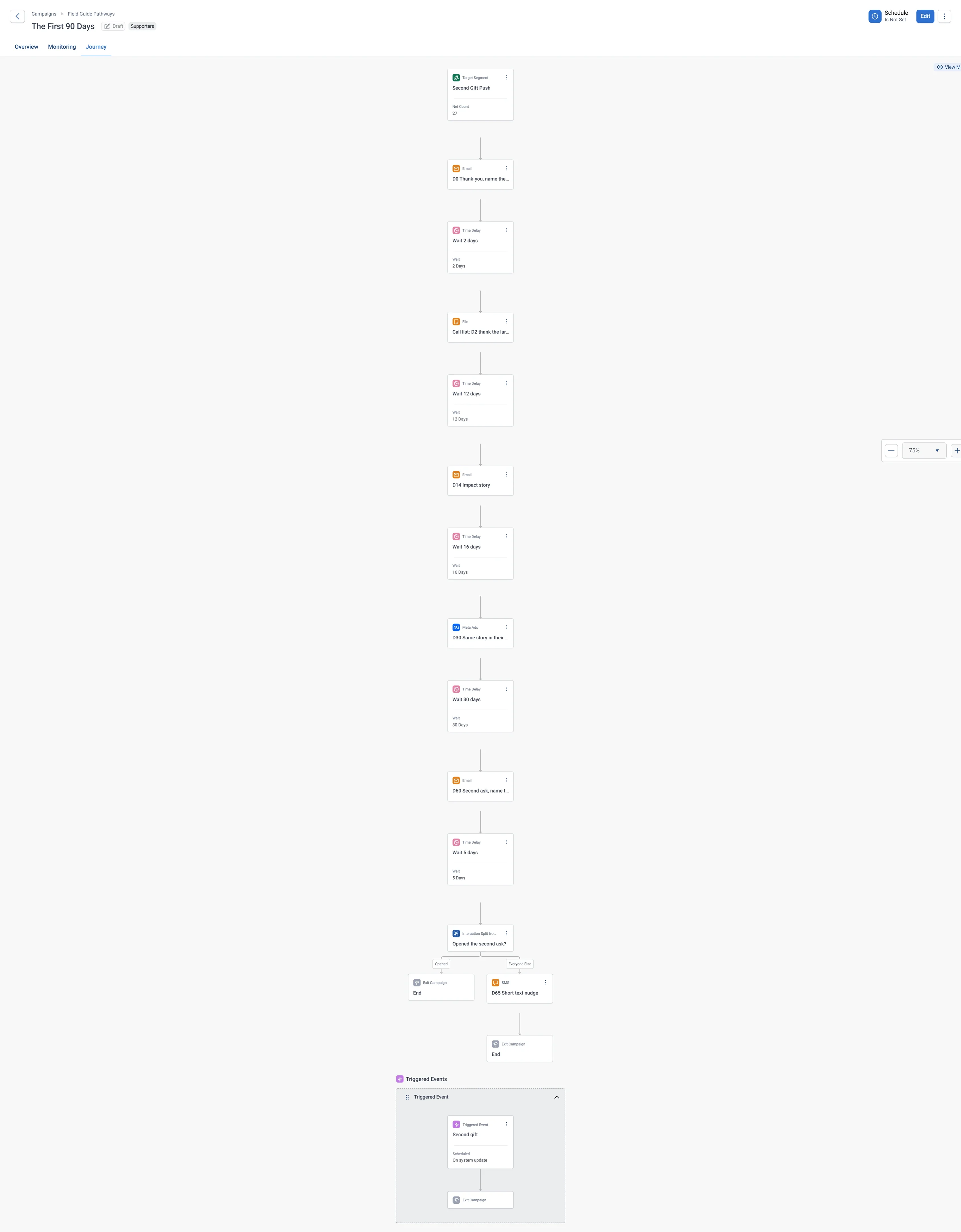
The The First 90 Days pathway runs this list. Here is each step, then the journey as it is built in Orbit.
Day 0
Email
A thank-you goes out automatically when a first gift lands, naming the campaign or event that brought them in.
Day 0
Goal and objectives
The thank-you carries a second-gift objective with a 90-day window that starts when each person receives it, so the journey is measured on second gifts, not opens.
Day 2
Call list
Your largest first gifts get a thank-you call.
Day 14
Email
An impact story: what their gift made possible.
Day 30
Meta Ads
The same story appears in their Facebook and Instagram feeds.
Day 60
Email
A second ask that names their first gift.
Day 65
SMS
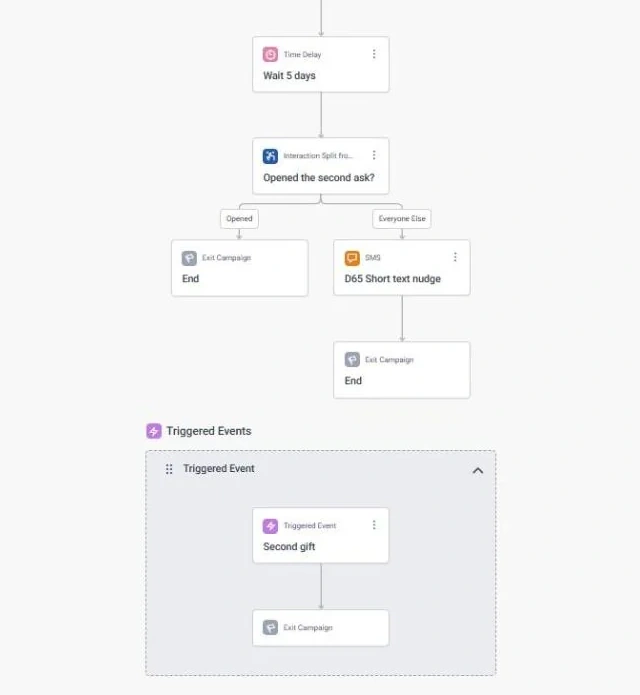
Did not open the ask: a short text nudge.
Watch the pathway
Watch the pathway
The First 90 Days · journey, part 1 of 3 The first third of the journey: the Second Gift Push audience gets a thank-you email, the largest first gifts go on a call list, then an impact story email after a wait. New donors get a warm welcome first.The First 90 Days · journey, part 2 of 3 The middle of the journey: the wait after the impact story, the same story in Meta ads, a long wait, a second ask that names the first gift, and an open check. The second ask builds up slowly.The First 90 Days · journey, part 3 of 3 The last third of the journey: people who opened the second ask leave, the rest get a short text nudge, and the Second gift Triggered Event sits below. The journey stops as soon as someone gives again.
What it is built from
Each insight below is worked out by Orbit for every supporter. Click one to read it in the Field Guide.
Second Donation Within 90 DaysDid this supporter give a second time soon after their first gift? Give these quick converters immediate stewardship, since they are the most likely to stay.
Days To Second DonationHow long did this supporter take to give a second time? Use it to judge your welcome series, since donors who give again quickly stay far longer.
Donor RetentionHas this supporter given just once, or come back to give again? Split one-time from repeat donors in any chart, like New vs Returning Donors on Campaign Performance.
Next to it on the Keep tab
New Donor WelcomeSupporters in the first year after their first gift.
Re-engagementSupporters 1 to 2 years past their last gift.
Cold Month SuppressionSupporters who have never given in the current calendar month, across their whole history.
Which new supporters will give a second time? These supporters have given once and are still in the window for a second gift. A faster second gift is strongly associated with long-term retention.
These brand-new donors are the people to ask for a second gift while they still feel close to the cause. The audience is locked because 2 other items depend on it.
What should I do with Second Gift Push?
Send a second ask within 60 days of the first gift. Reference their first gift specifically.
Which data does Second Gift Push use?
Second Donation Within 90 Days, Days To Second Donation, Donor Retention. Each is an insight Orbit works out for every supporter.
Which pathway uses Second Gift Push?
The First 90 Days: The weeks after a first gift decide whether there is a second one.
How do I build it in Apteco Orbit?
Open Audiences, start a new audience and add each rule: who to let in, then who to leave out. Build an audience by hand walks you through it, and Ask Orin to build it shows how Orin can draft it for you.
Learn Mission is a free course. Part 5 is all about audiences: you build one, read it tab by tab and tidy it before anyone gets a message.
Build it yourself
Start with the stops below, then read more in the Apteco Help Hub.