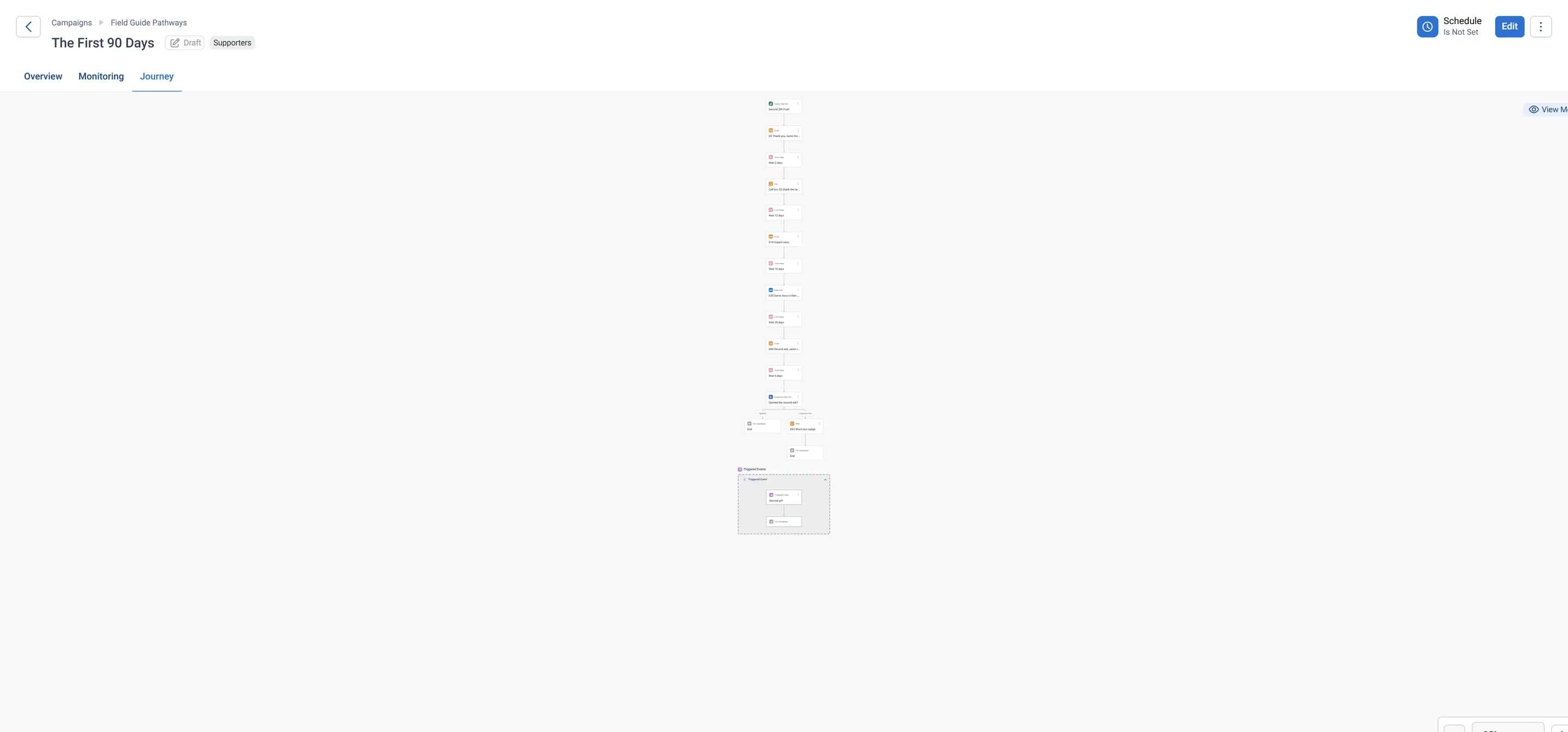
Apteco Mission starts small. Send three columns from your donation file: supporter ID, gift amount and gift date. No names, no addresses, no cleanup project first. Your file is rarely as messy as it feels, and it does not need tidying before you begin. We build Instant Insights on your real file once, and it stays yours, free for life. See What data do I need to start? Its First 90 Days pathway then asks for the second gift on time.
The straight answer. Start with your next new donor, not a cleanup project. From those same three columns you can see who gave for the first time and who has given again. Thank each new donor quickly. Ask for a second gift within their first few months. Then check it the same way every week. Joining event and volunteer data can come after.
Why the second gift. The Fundraising Effectiveness Project Q4 2025 report calls converting a first gift into a second the most consequential unsolved problem in the donor pipeline. It says new donor retention stayed essentially flat that year, while overall retention edged up from 43.1% to 43.3%. A small charity cannot fix the sector. It can see its own new donors, one at a time.
What to pull first. Export every gift with its supporter ID, amount and date. Nothing else is needed to begin. Use the ID, not the name, so two people called Pat Lee do not become one. Leave out soft credits, unpaid pledges, in-kind gifts and event tickets, so you count real gifts. Mission makes the donation ID itself, so you do not need one: see the FAQ.
Answer three questions. Who gave for the first time in the last three months? Of those, who has given again? And who is near the end of their first few months with no second gift? That last list is your work for this week. It is short, and it changes every week.
Work the list. The article Where to Start With Your Supporter Data gives a plan: a thank-you that names what brought them in, a thank-you call for the largest first gifts, a story of what their gift made possible, and a second ask at day 60 that names the first gift. The First 90 Days pathway says to send a second ask within 60 days of the first gift. None of this needs a data team. It needs the list, every week, and one person who owns it.
Then add the rest. Once the new-donor list works, join the other places supporters show up. Mission takes data from your CRM and other places, by file or direct connection, and matches it into one record per supporter. Add one source at a time. Mission leaves your CRM as it is.