Apteco Mission builds the board pack for you. The The Board Pack That Builds Itself pathway gathers the numbers your board asks for from every system, ready before every meeting. It says board numbers are often rebuilt by hand, from the CRM, the finance system, a grants spreadsheet and a coordinator's own counts. Mission joins these into one record per person, beside your CRM.
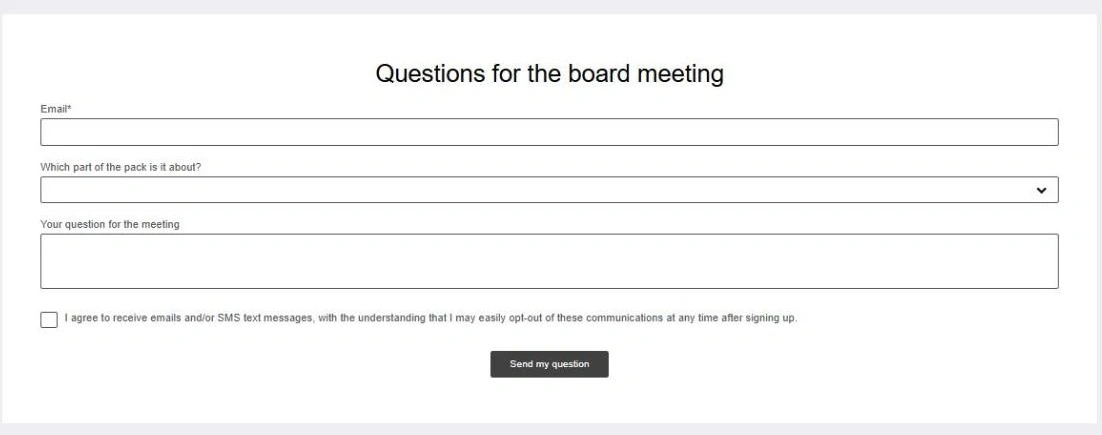
How the pack reaches the board. Mission's pathway says every module updates from the latest data, so nobody rebuilds a spreadsheet. Two weeks before, the pack is shared with the board as a group, view only. One week before, board members send questions ahead through a short form. At the meeting, everyone looks at the same live numbers on a laptop, tablet or phone. After, the pack is exported as a PDF for the minutes. Every board member can have their own Viewer login. See the The Board Pack That Builds Itself page.
Send it early. BoardSource's board meetings FAQ asks whether staff are getting materials to board members well before the meeting. It says that when members review the agenda and papers beforehand, they spend less time on each item in the meeting. Fix the send date once, such as a week before each quarterly meeting, so it happens every time.
Use a consent agenda. A consent agenda groups routine items, such as the last meeting's minutes and committee reports that need no vote, into one vote. BoardSource says it keeps meeting time on fiduciary, strategic and generative conversations. It also says financial statements should not go on it, and any member can ask to pull an item off for discussion.
Shrink the numbers to one page. Pick the handful of measures tied to your plan: income and donors against the same period last year, how many of last year's donors gave again, money against budget, and program results. Show the trend, not a table of every fund. Agree in advance what range is normal for each one. Then mark anything outside it.
Add the so-what. A number on its own starts a discussion about the number. A number with a reason and a suggestion starts a decision. Questions sent in ahead let staff bring answers to the meeting instead of a promise to follow up. A board page should help people decide, not just show data, so end each section with the choice you want from them.
Keep comparisons fair. The The Board Pack That Builds Itself page says Same Period Last Year keeps every comparison fair, whatever month the meeting falls in. It also says donor retention is Retained donors divided by everyone who gave last year, so the rate means what it says.